Tour Highlights:
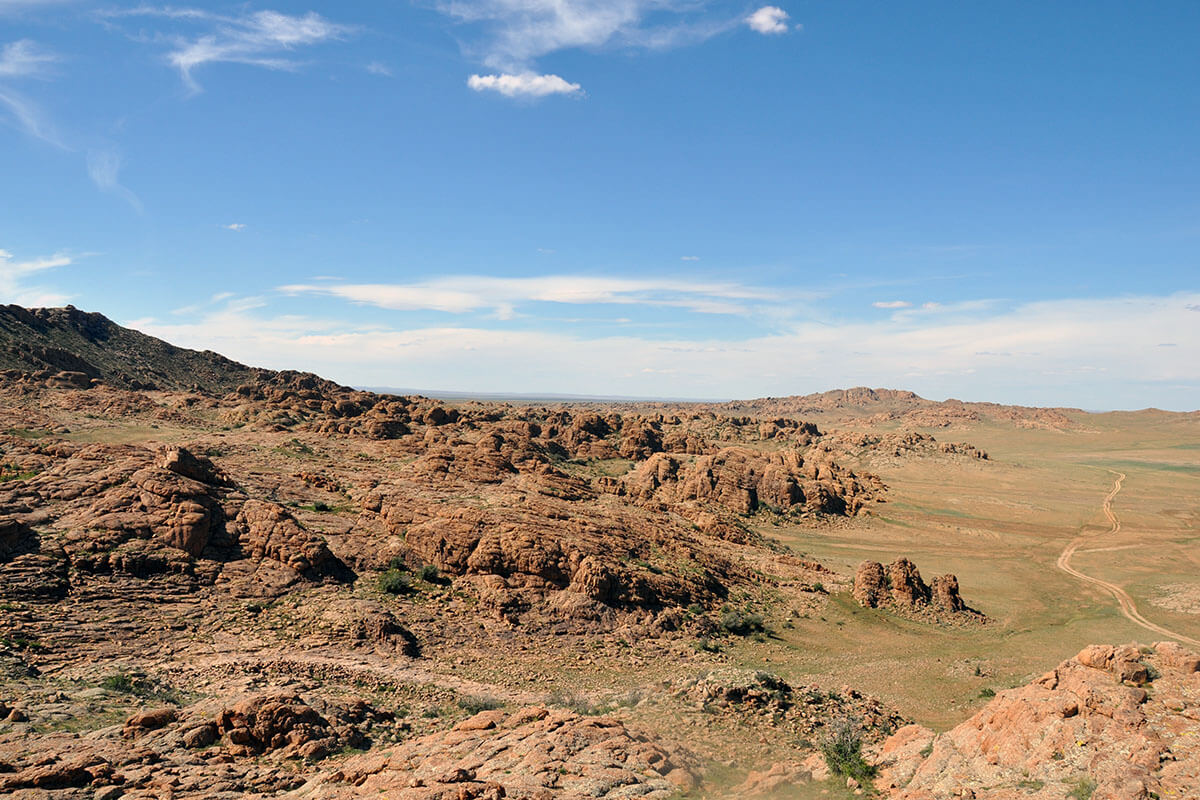
Ikh Gazriin Chuluu: A dramatic granite rock formation rising out of the steppe, dotted with caves, canyons, and ancient petroglyphs.
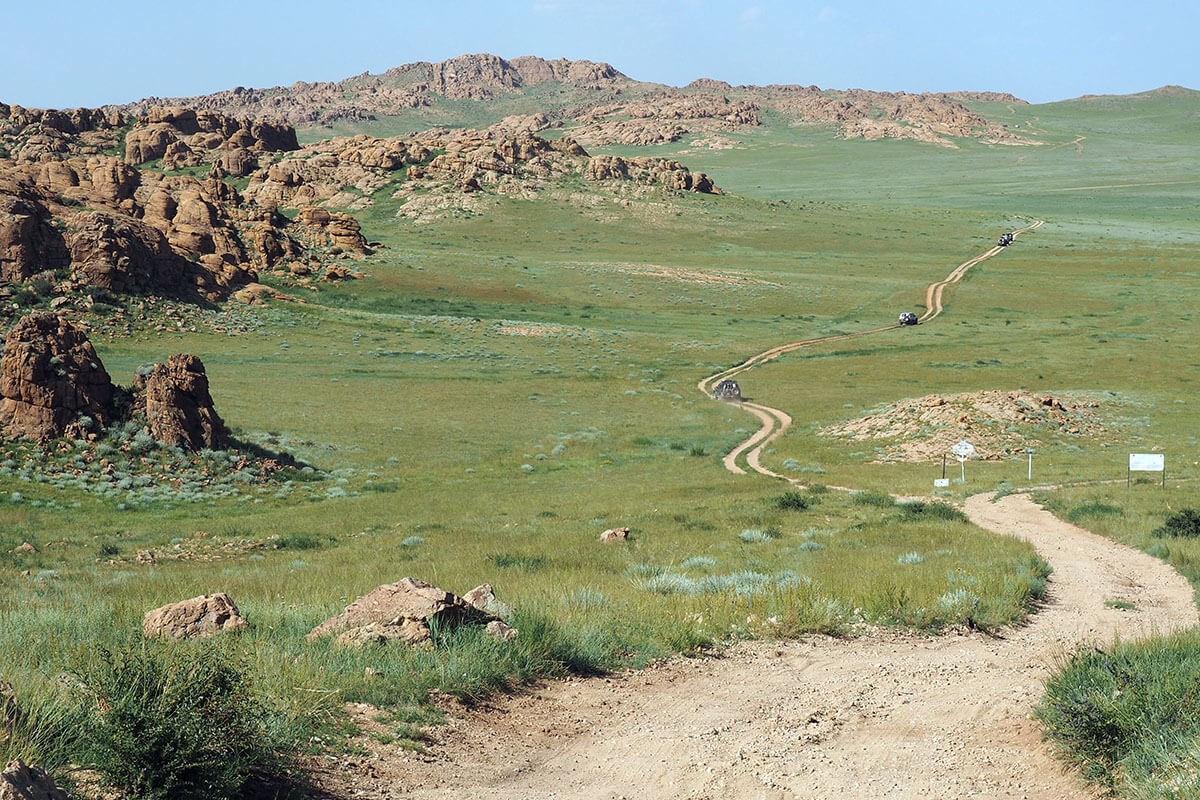
Baga Gazriin Chuluu: Smaller granite formations, sacred springs, and ruins of a 17th-century monastery.
Ongiin Khiid Monastery: Once one of the largest monasteries in Mongolia, partially restored after destruction, set by the Ongi River.
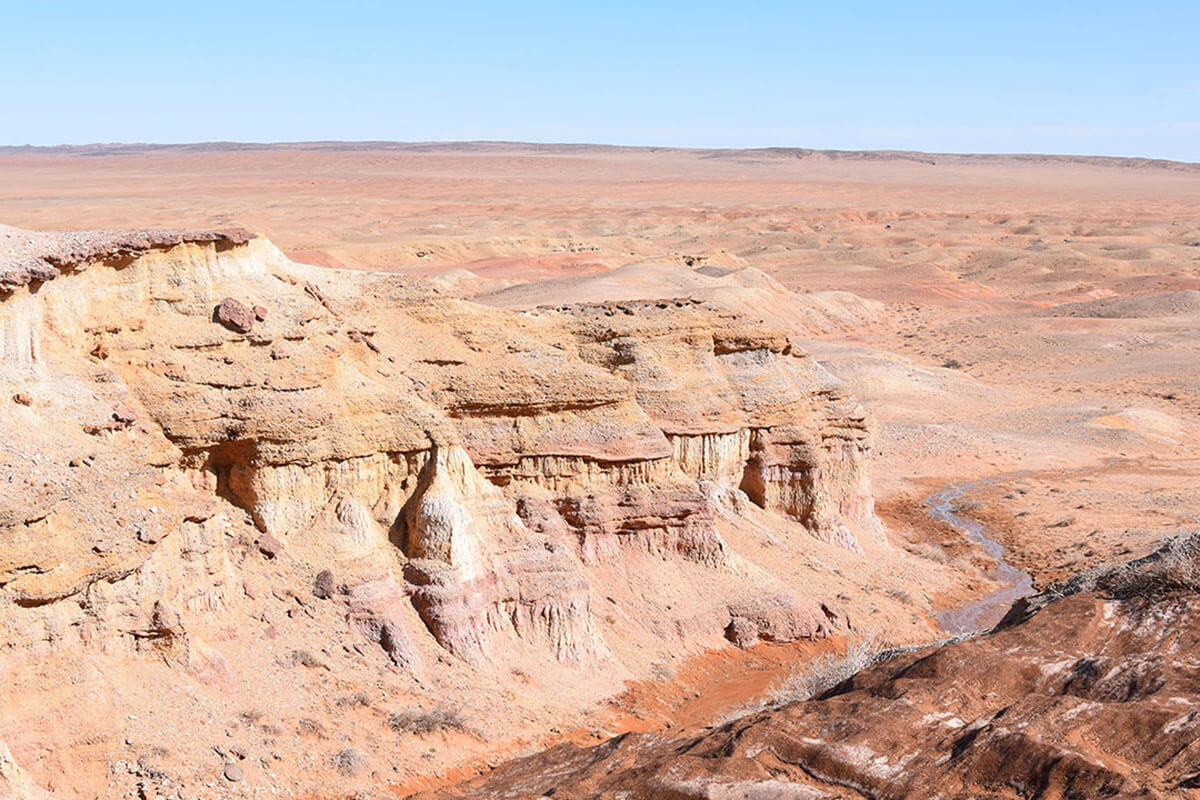
Tsagaan Suvarga (White Stupa Cliffs): Spectacular chalky limestone cliffs with layered colors, resembling a canyon.
Petroglyphs & Rock Art: Ancient carvings and symbols scattered throughout rocky outcrops.
Nomadic Life: Encounters with camel herders and steppe nomads, offering insight into desert survival traditions.
Camel Riding: Explore semi-desert steppe and rocky valleys on two-humped Bactrian camels.
Hiking & Photography: Ideal landscapes for climbing rocks, hiking canyons, and capturing desert panoramas.
Stargazing: With little light pollution, the Gobi sky is spectacular at night.
Ikh Gazriin Chuluu
Tsagaan Suvarga
Baga Gazriin Chuluu
Ongi monastery
Karakorum
Drive to Ulaanbaatar via Elsen Tasarkhai



Day To Day Itinerary
Ikh Gazriin Chuluu is a striking granite mountain range rising dramatically from the open steppe of the Northern Gobi. Its rugged cliffs, bizarre rock formations, caves, and canyons create a landscape rich in both natural beauty and legend. The area is considered sacred by locals, with ancient petroglyphs, hidden springs, and sites tied to Mongolian folklore. Visitors can hike among towering rocks shaped by centuries of wind and weather, explore caves used by monks for meditation, and enjoy sweeping views over the vast desert plains.
Hiking & Climbing: Discover rugged granite formations, canyons, and panoramic steppe views.
Cave Exploration: Explore meditation caves and hidden springs.
Photography: Capture dramatic rocks and desert horizons.
Wildlife Watching: Spot gazelles, marmots, and steppe birds.
Camping & Stargazing: Stay under the Gobi sky and enjoy brilliant stars.
Ikh Gazriin Chuluu
Ikh Gazriin Chuluu is a striking granite mountain range rising dramatically from the open steppe of the Northern Gobi. Its rugged cliffs, bizarre rock formations, caves, and canyons create a landscape rich in both natural beauty and legend. The area is considered sacred by locals, with ancient petroglyphs, hidden springs, and sites tied to Mongolian folklore. Visitors can hike among towering rocks shaped by centuries of wind and weather, explore caves used by monks for meditation, and enjoy sweeping views over the vast desert plains.
Hiking & Climbing: Discover rugged granite formations, canyons, and panoramic steppe views.
Cave Exploration: Explore meditation caves and hidden springs.
Photography: Capture dramatic rocks and desert horizons.
Wildlife Watching: Spot gazelles, marmots, and steppe birds.
Camping & Stargazing: Stay under the Gobi sky and enjoy brilliant stars.
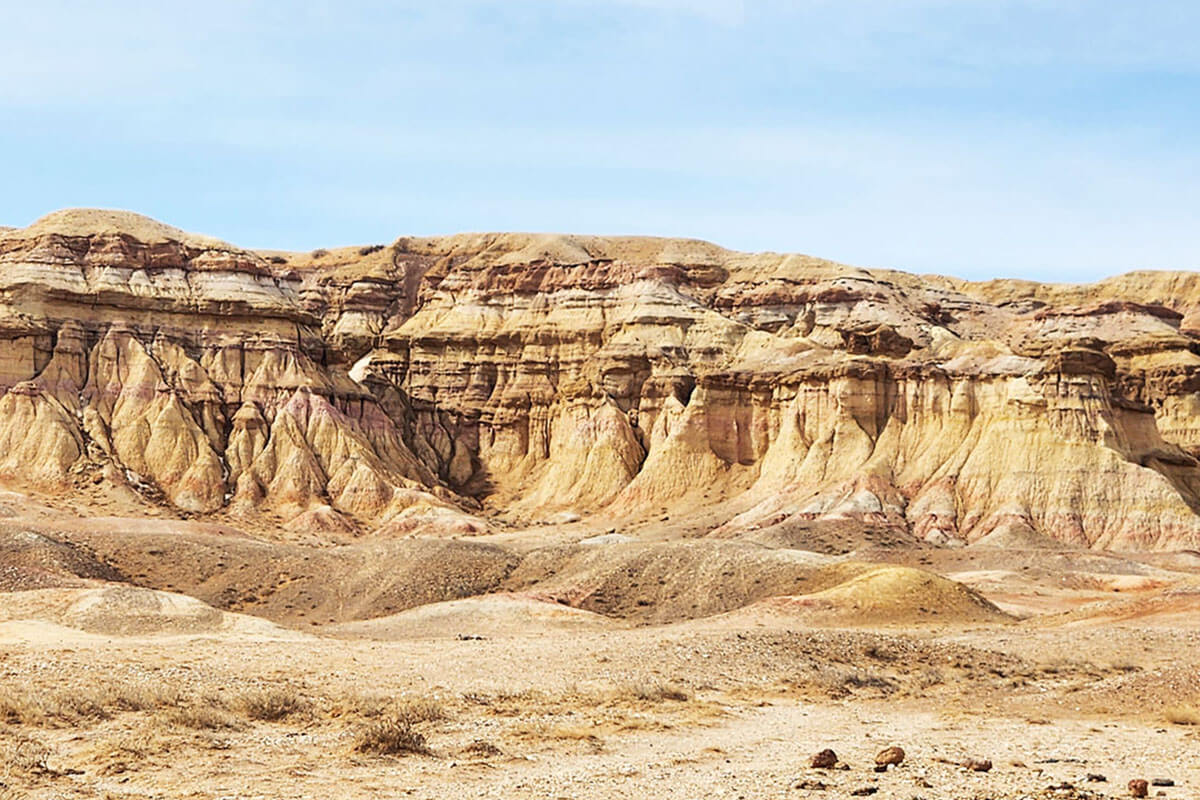
Tsagaan Suvarga, known as the White Stupa Cliffs, is one of the Gobi’s most spectacular natural wonders. These towering limestone and clay formations stretch for over 400 meters long and 60 meters high, resembling a ruined city or ancient fortress when viewed from afar. Wind and water erosion have painted the cliffs in striking shades of white, pink, orange, and red, especially vivid at sunrise and sunset.
Walking at the base of the cliffs feels like stepping into another world, with surreal shapes, silent canyons, and layered rock revealing millions of years of geological history. It is also a place of legend—locals believe the cliffs hold spiritual power, adding to their mystique.
Rock Formations: Towering limestone cliffs with surreal shapes.
Vivid Colors: White, pink, orange, and red layers, striking at sunrise and sunset.
Geological Wonder: Erosion-carved cliffs and canyons.
Photography: Dramatic landscapes for stunning shots.
Hiking: Explore cliffs and canyons up close
Tsagaan Suvarga
Tsagaan Suvarga, known as the White Stupa Cliffs, is one of the Gobi’s most spectacular natural wonders. These towering limestone and clay formations stretch for over 400 meters long and 60 meters high, resembling a ruined city or ancient fortress when viewed from afar. Wind and water erosion have painted the cliffs in striking shades of white, pink, orange, and red, especially vivid at sunrise and sunset.
Walking at the base of the cliffs feels like stepping into another world, with surreal shapes, silent canyons, and layered rock revealing millions of years of geological history. It is also a place of legend—locals believe the cliffs hold spiritual power, adding to their mystique.
Rock Formations: Towering limestone cliffs with surreal shapes.
Vivid Colors: White, pink, orange, and red layers, striking at sunrise and sunset.
Geological Wonder: Erosion-carved cliffs and canyons.
Photography: Dramatic landscapes for stunning shots.
Hiking: Explore cliffs and canyons up close
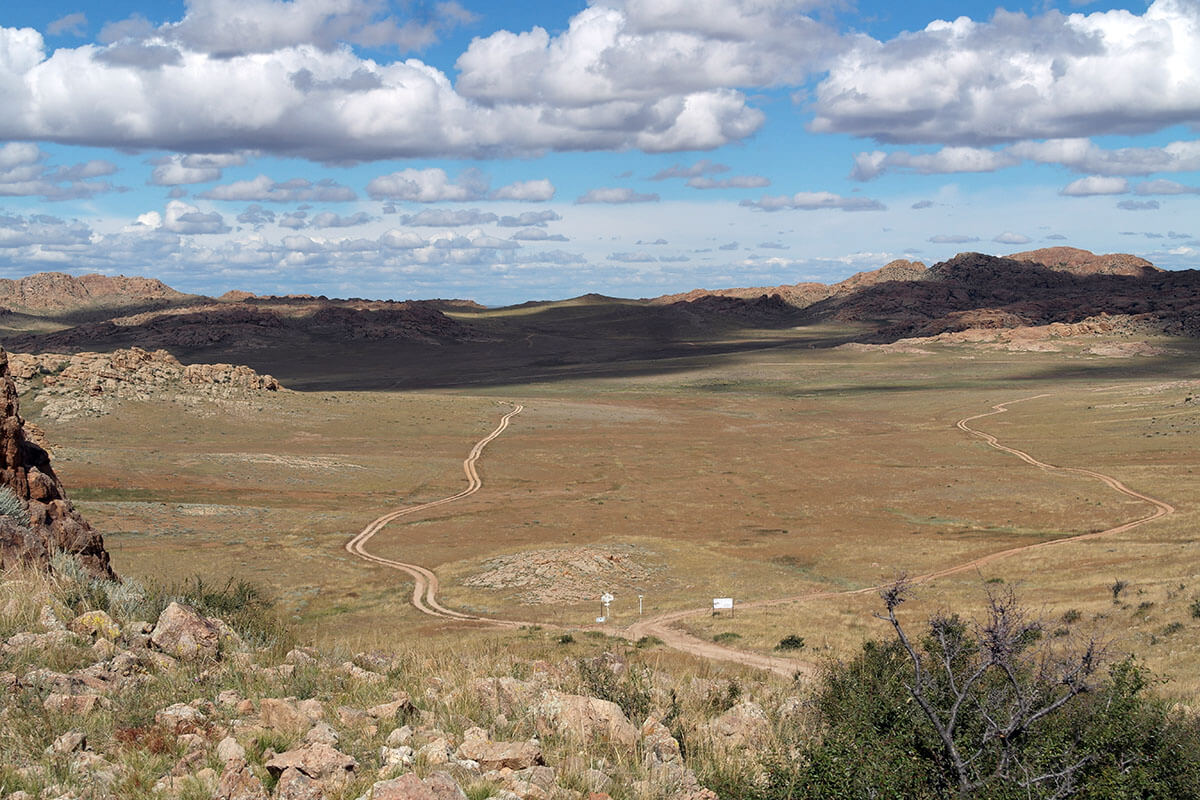
Baga Gazriin Chuluu is a smaller yet captivating granite rock formation located in the Northern Gobi. Its rugged cliffs, caves, and hidden springs create a serene and mystical landscape. Unlike its larger neighbor Ikh Gazriin Chuluu, Baga Gazriin Chuluu is quieter and less visited, making it perfect for those seeking solitude. The area also holds historical significance, with the ruins of a 17th-century monastery nestled among the rocks and sacred sites revered by local nomads.
Hiking through its narrow canyons, exploring meditation caves, and observing the delicate desert flora and fauna offer a peaceful connection to nature and Mongolia’s cultural heritage.
Rock Formations: Granite cliffs, caves, and canyons.
Historical Sites: 17th-century monastery ruins and sacred spots.
Quiet Escape: Off-the-beaten-path serenity.
Hiking: Explore trails, springs, and rocks.
Baga Gazriin Chuluu
Baga Gazriin Chuluu is a smaller yet captivating granite rock formation located in the Northern Gobi. Its rugged cliffs, caves, and hidden springs create a serene and mystical landscape. Unlike its larger neighbor Ikh Gazriin Chuluu, Baga Gazriin Chuluu is quieter and less visited, making it perfect for those seeking solitude. The area also holds historical significance, with the ruins of a 17th-century monastery nestled among the rocks and sacred sites revered by local nomads.
Hiking through its narrow canyons, exploring meditation caves, and observing the delicate desert flora and fauna offer a peaceful connection to nature and Mongolia’s cultural heritage.
Rock Formations: Granite cliffs, caves, and canyons.
Historical Sites: 17th-century monastery ruins and sacred spots.
Quiet Escape: Off-the-beaten-path serenity.
Hiking: Explore trails, springs, and rocks.
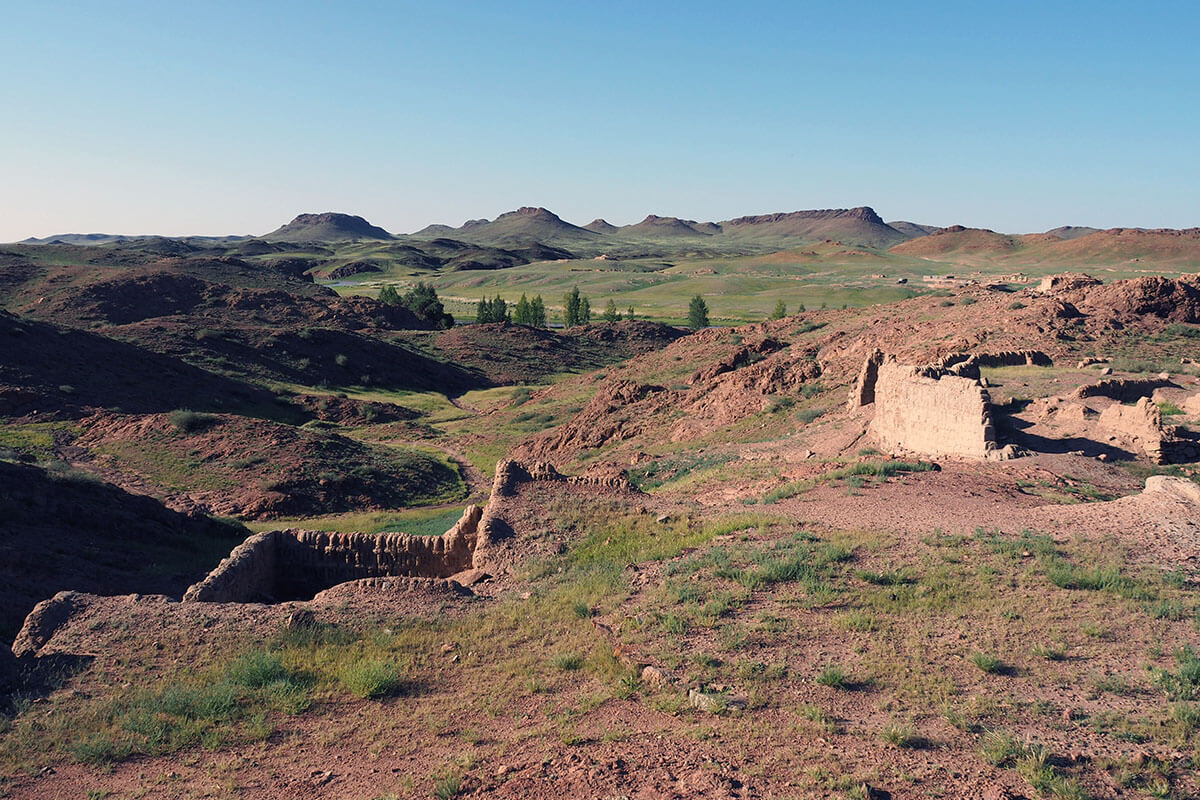
Ongiin Monastery, or Ongiin Khiid, is one of Mongolia’s most historically significant monastic sites, located along the Ongi River in the Northern Gobi. Founded in the 17th century, it was once a thriving complex of temples, meditation halls, and monastic residences. The monastery was destroyed during the 1930s purges, but several structures, including a few temples and stupas, have been partially restored, giving visitors a glimpse into its past grandeur.
Surrounded by the serene desert landscape, Ongiin Monastery offers a mix of history, spirituality, and striking natural beauty. Visitors can explore the ruins, learn about Mongolia’s Buddhist traditions, and experience the peaceful rhythm of life along the Ongi River.
Explore Ruins: Visit temples, stupas, and meditation halls.
History & Culture: Learn about the monastery’s past and Buddhist traditions.
Hiking: Walk along riverbanks and nearby hills.
Spiritual Experience: Observe monks and traditional rituals.
Ongi monastery
Ongiin Monastery, or Ongiin Khiid, is one of Mongolia’s most historically significant monastic sites, located along the Ongi River in the Northern Gobi. Founded in the 17th century, it was once a thriving complex of temples, meditation halls, and monastic residences. The monastery was destroyed during the 1930s purges, but several structures, including a few temples and stupas, have been partially restored, giving visitors a glimpse into its past grandeur.
Surrounded by the serene desert landscape, Ongiin Monastery offers a mix of history, spirituality, and striking natural beauty. Visitors can explore the ruins, learn about Mongolia’s Buddhist traditions, and experience the peaceful rhythm of life along the Ongi River.
Explore Ruins: Visit temples, stupas, and meditation halls.
History & Culture: Learn about the monastery’s past and Buddhist traditions.
Hiking: Walk along riverbanks and nearby hills.
Spiritual Experience: Observe monks and traditional rituals.

Today, we’ll drive to Karakorum (Kharkhorin), the 13th-century capital of Genghis Khan’s Mongolian Empire, built in 1220 on the ruins of Turug and Uigur cities in the Orkhon Valley. Once a multicultural hub and symbolized by the legendary silver tree of Möngke Khan’s palace, Karakorum thrived as the center of politics, trade, culture, and diplomacy. Though it lost its status after the Mongol capital moved to Beijing and was later destroyed by Ming troops in 1388, its legacy lives on.
You’ll visit Erdene Zuu Monastery, founded in 1588 on the site of the old city, featuring 3 main temples—Dalai Lama, Zuu of Buddha, and Lavrin—within impressive 400 m × 400 m walls. The Karakorum Archaeological Museum offers a fascinating collection of 13th–14th century artifacts, including pottery, bronzes, coins, religious sculptures, and a scale model of the ancient city.
Other highlights include Turtle Rock, Phallic Rock, and a small market showcasing local artists’ work.
Erdene Zuu Monastery: Explore temples and historic grounds within the enclosing walls.
Karakorum Museum: See 13th–14th century artifacts and a model of ancient Karakorum.
Turtle & Phallic Rocks: Visit iconic natural formations.
Local Market: Browse artworks and handicrafts.
Photography: Capture ruins, monastery architecture, and landscapes.
History & Culture: Learn about Genghis Khan’s empire and Mongolia’s Buddhist heritage.
Karakorum
Today, we’ll drive to Karakorum (Kharkhorin), the 13th-century capital of Genghis Khan’s Mongolian Empire, built in 1220 on the ruins of Turug and Uigur cities in the Orkhon Valley. Once a multicultural hub and symbolized by the legendary silver tree of Möngke Khan’s palace, Karakorum thrived as the center of politics, trade, culture, and diplomacy. Though it lost its status after the Mongol capital moved to Beijing and was later destroyed by Ming troops in 1388, its legacy lives on.
You’ll visit Erdene Zuu Monastery, founded in 1588 on the site of the old city, featuring 3 main temples—Dalai Lama, Zuu of Buddha, and Lavrin—within impressive 400 m × 400 m walls. The Karakorum Archaeological Museum offers a fascinating collection of 13th–14th century artifacts, including pottery, bronzes, coins, religious sculptures, and a scale model of the ancient city.
Other highlights include Turtle Rock, Phallic Rock, and a small market showcasing local artists’ work.
Erdene Zuu Monastery: Explore temples and historic grounds within the enclosing walls.
Karakorum Museum: See 13th–14th century artifacts and a model of ancient Karakorum.
Turtle & Phallic Rocks: Visit iconic natural formations.
Local Market: Browse artworks and handicrafts.
Photography: Capture ruins, monastery architecture, and landscapes.
History & Culture: Learn about Genghis Khan’s empire and Mongolia’s Buddhist heritage.
Elsen Tasarkhai is a beautiful area of gently rolling sand dunes near Kharkhorin, blending desert scenery with traditional nomadic camps. Visitors can climb the dunes for panoramic views, take camel rides, and enjoy stunning sunsets. The area is perfect for photography, hiking, and experiencing the peaceful semi-desert landscape.
In the evening we will back to Ulaanbaatar
Climb the Dunes: Enjoy panoramic desert and steppe views.
Camel Riding: Explore the dunes on Bactrian camels.
Hiking: Trek through dunes, hills, and rocky outcrops.
Drive to Ulaanbaatar via Elsen Tasarkhai
Elsen Tasarkhai is a beautiful area of gently rolling sand dunes near Kharkhorin, blending desert scenery with traditional nomadic camps. Visitors can climb the dunes for panoramic views, take camel rides, and enjoy stunning sunsets. The area is perfect for photography, hiking, and experiencing the peaceful semi-desert landscape.
In the evening we will back to Ulaanbaatar
Climb the Dunes: Enjoy panoramic desert and steppe views.
Camel Riding: Explore the dunes on Bactrian camels.
Hiking: Trek through dunes, hills, and rocky outcrops.
Similar Tours
Big Loop
- Moderate
- 17 days
- 14 / max
The Secret of Gobi Desert & the Winding Steppes of Mongolia
- Moderate
- 8 days
- 14 / max
Thousand Camel Festival in the Gobi Desert
- Moderate
- 7 days
- 14 / max
Gobi Desert Camel Expedition
- Moderate
- 10 days
- 14 / max

Thousand Camel Festival in the Gobi Desert
- Moderate
- 7 days
- 14 / max
Gobi Desert to Khovsgol Lake
- Moderate
- 6 days
- 14 / max
Gobi Desert in Winter
- Moderate
- 9 days
Self Drive to Gobi Desert & Orkhon valley
- Moderate
- 12 days