Tour Highlights:
Camel Trek: Ride Bactrian camels across the towering Khongor Sand Dunes.
Singing Sands: Watch the dunes’ shifting colors and hear their natural melody.
Nomadic Life: Visit local herders and learn about their traditions.
Ger Camps: Sleep under the starry desert sky in traditional Gers.
Wildlife: Spot gazelles, desert foxes, and native birds.
Baga Gazriin Chuluu
Yolyn Am
Khongoryn Els
Camel Riding to Red Hill
Camel Riding to Chono Kharaikh
Camel riding back to Red Hill
Camel riding back to the “Singing Sands”
Drive to Bayanzag/Flaming Cliffs
Tsagaan Suvarga
Ulaanbaatar


Day To Day Itinerary
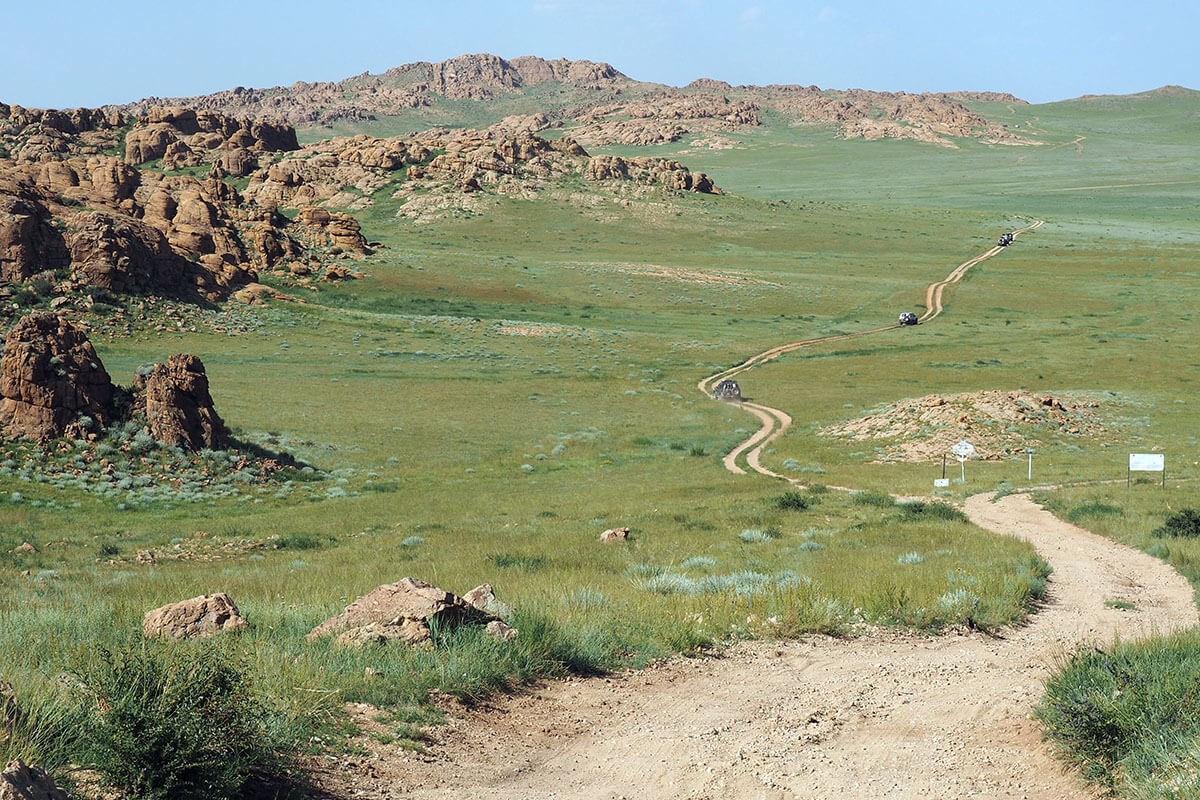
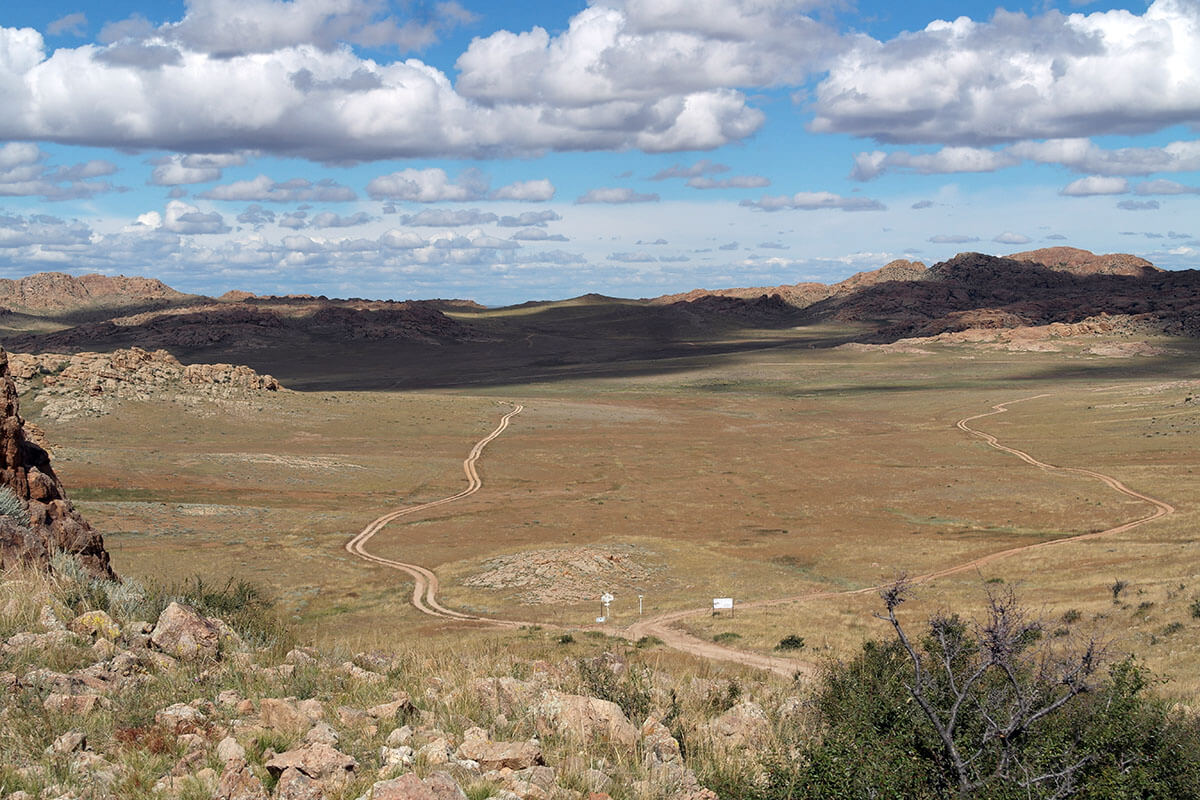
Your first destination will be 250 kilometers south, in the beautiful region of Baga Gazriin Chuluu. This area features a large granite formation right in the heart of Mongolia's sandy plains.
On this expansive plain, you'll discover the remnants of a small monastery known as Delgeriin Choir Monastery. Upon entering a Ger for the first time, you will be welcomed by a grand 12-walled structure. Monks utilize this intricately decorated and carved Ger to chant during the colder months when the stone monastery becomes too chilly. In the late afternoon, you can drive and hike around the region. You will wander through towering granite hills that appear to stretch endlessly. As you explore, you'll stumble upon scenic ruins of a small monastery nestled in a serene, protected valley. Additionally, Baga Gazriin Chuluu is home to a spring known for its eye-healing qualities, where locals harness the magical water for eye ailments.
Activities:
- Explore the Choir Monastery
- Discover the stunning rock formation of Baga Gazar
- Visit the ruins of the solitary monk's monastery
Baga Gazriin Chuluu
Your first destination will be 250 kilometers south, in the beautiful region of Baga Gazriin Chuluu. This area features a large granite formation right in the heart of Mongolia's sandy plains.
On this expansive plain, you'll discover the remnants of a small monastery known as Delgeriin Choir Monastery. Upon entering a Ger for the first time, you will be welcomed by a grand 12-walled structure. Monks utilize this intricately decorated and carved Ger to chant during the colder months when the stone monastery becomes too chilly. In the late afternoon, you can drive and hike around the region. You will wander through towering granite hills that appear to stretch endlessly. As you explore, you'll stumble upon scenic ruins of a small monastery nestled in a serene, protected valley. Additionally, Baga Gazriin Chuluu is home to a spring known for its eye-healing qualities, where locals harness the magical water for eye ailments.
Activities:
- Explore the Choir Monastery
- Discover the stunning rock formation of Baga Gazar
- Visit the ruins of the solitary monk's monastery

Today we will be driving to the South Gobi province town Dalanzadgad. The Gobi Desert extends through Mongolia and China, measuring 1,610 kilometers from southwest to northeast and 800 kilometers from north to south. It covers an area of 1,295,000 km2, making it the world’s fifth largest desert and Asia’s largest although most of the Gobi is coated in bare rock rather than sand.
During the winter months, the Gobi is a cold desert with frost snow on its dunes. In addition to being far north, it is situated on a plateau between 910 and 1,520 meters above sea level, which leads to the cold temperatures. The Gobi receives around 194 millimetres of rain per year on average. In the winter, snow blown from the Siberian Steppes enters parts of the Gobi, providing additional moisture. The Gobi experiences temperature extremes ranging from –40°C in the winter to +50°C in the summer due to these winds.
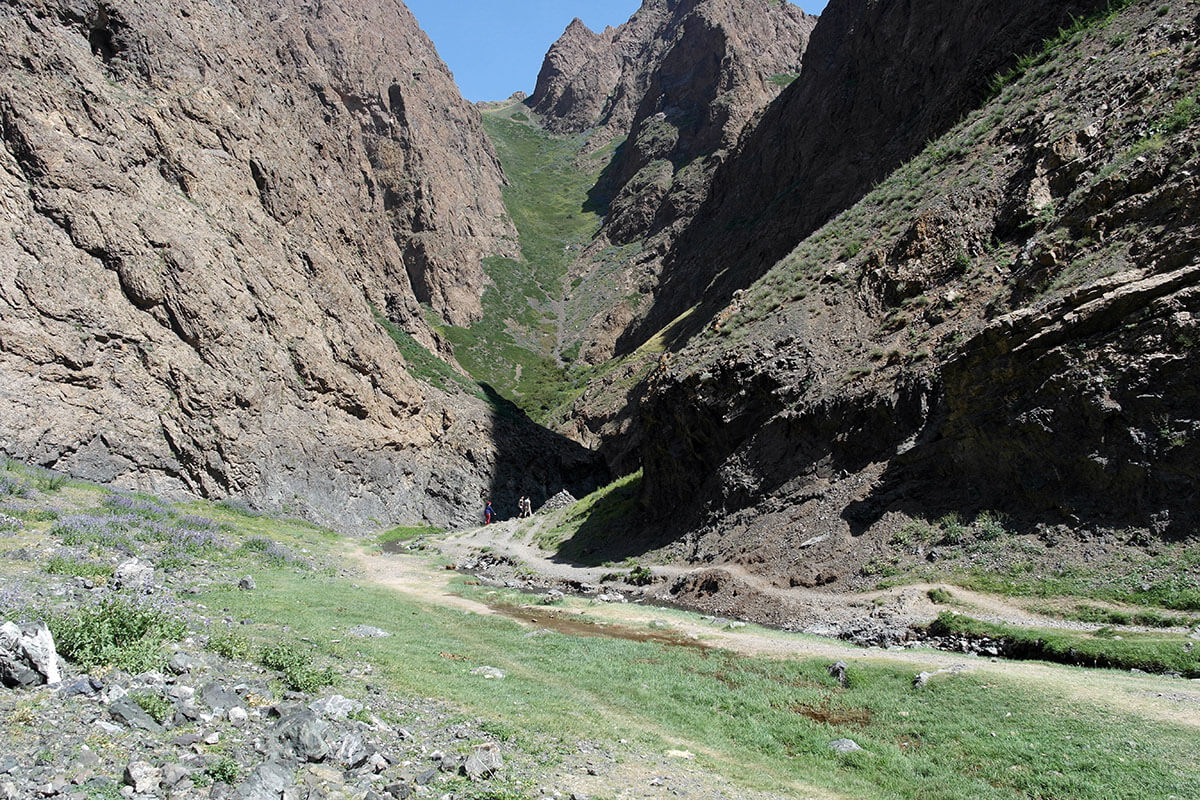
We'll take a trip through the majestic Altai Mountain Range's breath-taking gorges. The Yolyn Am located in the Gobi Gurvansaikhan National Park, will be visited. Those green valleys were carved by ancient rivers.
Wild Argali sheep, Ibex, desert gazelles, and Golden Eagles are also possible sightings.
Activities:
- Visit small museum of the park
- Visit Yolyn am gorge
- Hike through the gorge
Yolyn Am
Today we will be driving to the South Gobi province town Dalanzadgad. The Gobi Desert extends through Mongolia and China, measuring 1,610 kilometers from southwest to northeast and 800 kilometers from north to south. It covers an area of 1,295,000 km2, making it the world’s fifth largest desert and Asia’s largest although most of the Gobi is coated in bare rock rather than sand.
During the winter months, the Gobi is a cold desert with frost snow on its dunes. In addition to being far north, it is situated on a plateau between 910 and 1,520 meters above sea level, which leads to the cold temperatures. The Gobi receives around 194 millimetres of rain per year on average. In the winter, snow blown from the Siberian Steppes enters parts of the Gobi, providing additional moisture. The Gobi experiences temperature extremes ranging from –40°C in the winter to +50°C in the summer due to these winds.
We'll take a trip through the majestic Altai Mountain Range's breath-taking gorges. The Yolyn Am located in the Gobi Gurvansaikhan National Park, will be visited. Those green valleys were carved by ancient rivers.
Wild Argali sheep, Ibex, desert gazelles, and Golden Eagles are also possible sightings.
Activities:
- Visit small museum of the park
- Visit Yolyn am gorge
- Hike through the gorge
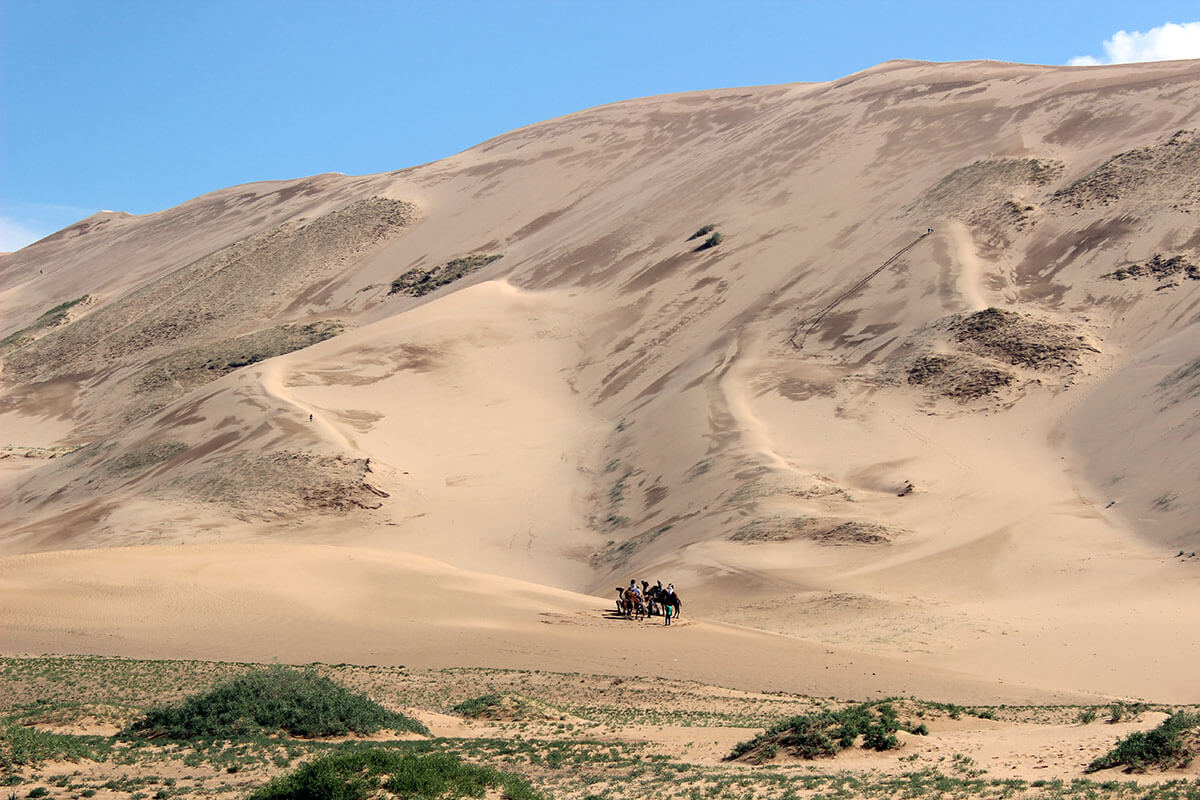
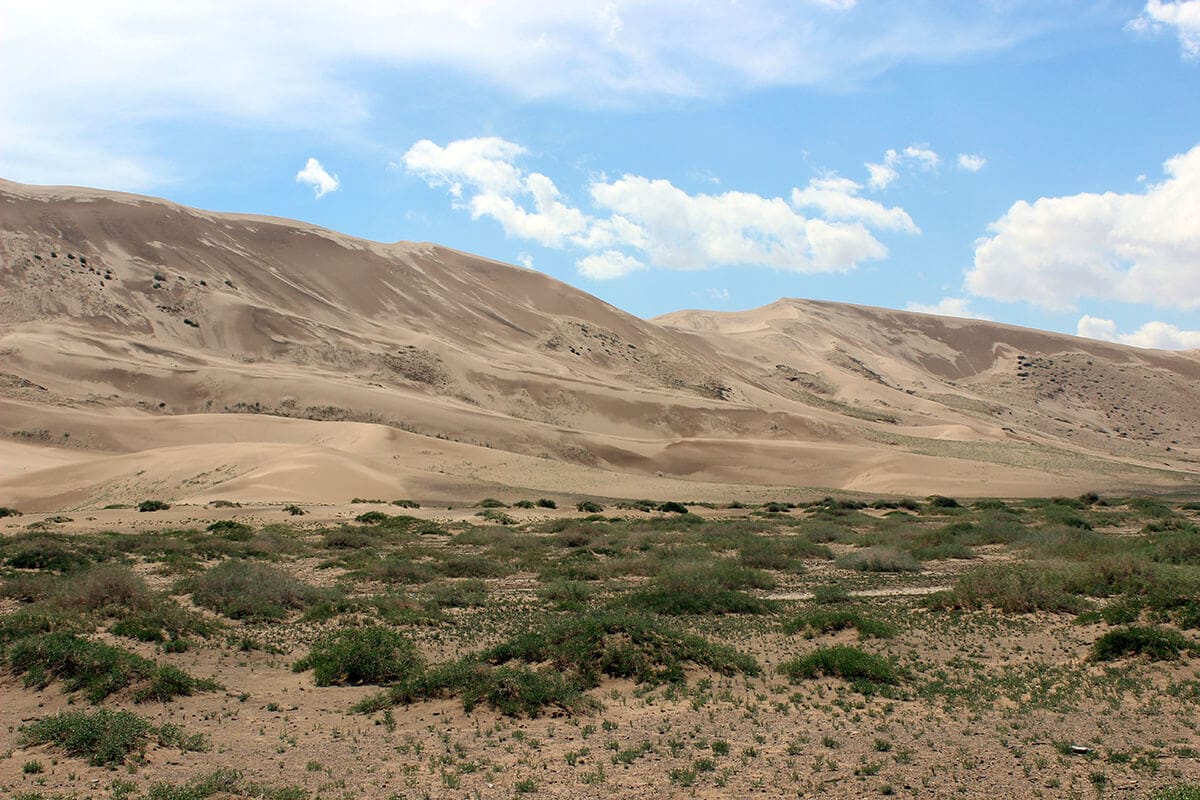
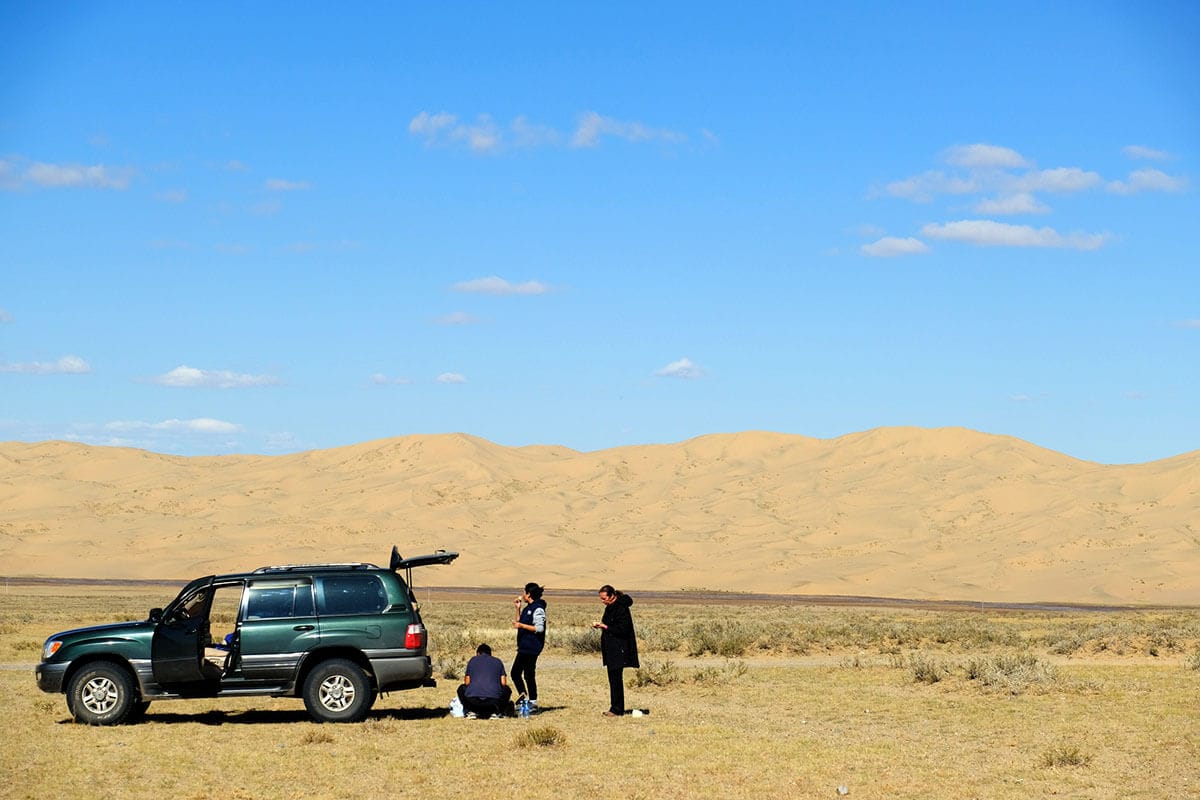
After enjoying a substantial breakfast, we will journey 180 kilometers west to the Khongoryn Els. This location boasts Mongolia's largest sand dunes. Reaching heights of up to 275 meters in some spots, these dunes stretch over 100 kilometers from east to west. The sands exhibit alluring curves that culminate in sharp points, creating beautiful wave patterns. Behind the dunes, the striking black rocky formation of Sevrey Mountain stands majestically. The Gobi Desert holds the title of the world's coldest desert, where frigid winds sweep across the plains throughout autumn, winter, and spring. With little shelter available, inhabitants must rely on extreme survival techniques to endure the harsh conditions. Gobi nomads are renowned in Mongolia for their unwavering commitment to hard work. We will encounter families who breed two-humped camels and discover their simple, humble, industrious, yet remarkable lifestyle.
Activities:
- Explore the Khongoryn Els Sand Dunes
- Hike to the tallest dune for those who are interested.
- Visit a family that breeds camels.
Khongoryn Els
After enjoying a substantial breakfast, we will journey 180 kilometers west to the Khongoryn Els. This location boasts Mongolia's largest sand dunes. Reaching heights of up to 275 meters in some spots, these dunes stretch over 100 kilometers from east to west. The sands exhibit alluring curves that culminate in sharp points, creating beautiful wave patterns. Behind the dunes, the striking black rocky formation of Sevrey Mountain stands majestically. The Gobi Desert holds the title of the world's coldest desert, where frigid winds sweep across the plains throughout autumn, winter, and spring. With little shelter available, inhabitants must rely on extreme survival techniques to endure the harsh conditions. Gobi nomads are renowned in Mongolia for their unwavering commitment to hard work. We will encounter families who breed two-humped camels and discover their simple, humble, industrious, yet remarkable lifestyle.
Activities:
- Explore the Khongoryn Els Sand Dunes
- Hike to the tallest dune for those who are interested.
- Visit a family that breeds camels.
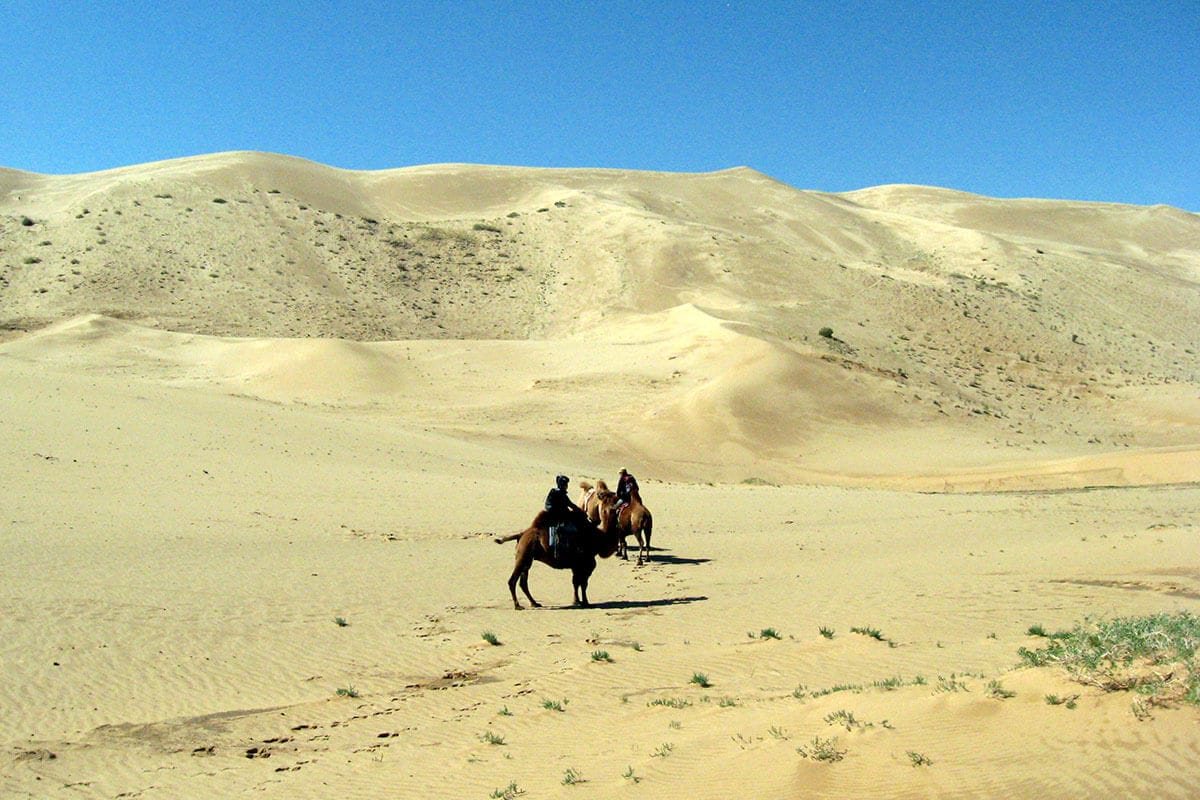
We’ll arrive at our host family’s home in the morning, load our belongings onto camels, and begin our trek along the dunes. During this four-day camel journey, we’ll be guided by an experienced camel herder. The Gobi is home to antelopes and black-tailed gazelles, and with a bit of luck, we may catch a glimpse of them. Along the way, we’ll learn to water and care for the camels, just as nomads have done for generations. There will be plenty of time to explore the surroundings before setting up our first campsite. As the sun sets and the desert cools, let the vastness of the landscape bring peace to your heart and calm to your soul.
Activities:
- Camel riding
Camel Riding to Red Hill
We’ll arrive at our host family’s home in the morning, load our belongings onto camels, and begin our trek along the dunes. During this four-day camel journey, we’ll be guided by an experienced camel herder. The Gobi is home to antelopes and black-tailed gazelles, and with a bit of luck, we may catch a glimpse of them. Along the way, we’ll learn to water and care for the camels, just as nomads have done for generations. There will be plenty of time to explore the surroundings before setting up our first campsite. As the sun sets and the desert cools, let the vastness of the landscape bring peace to your heart and calm to your soul.
Activities:
- Camel riding
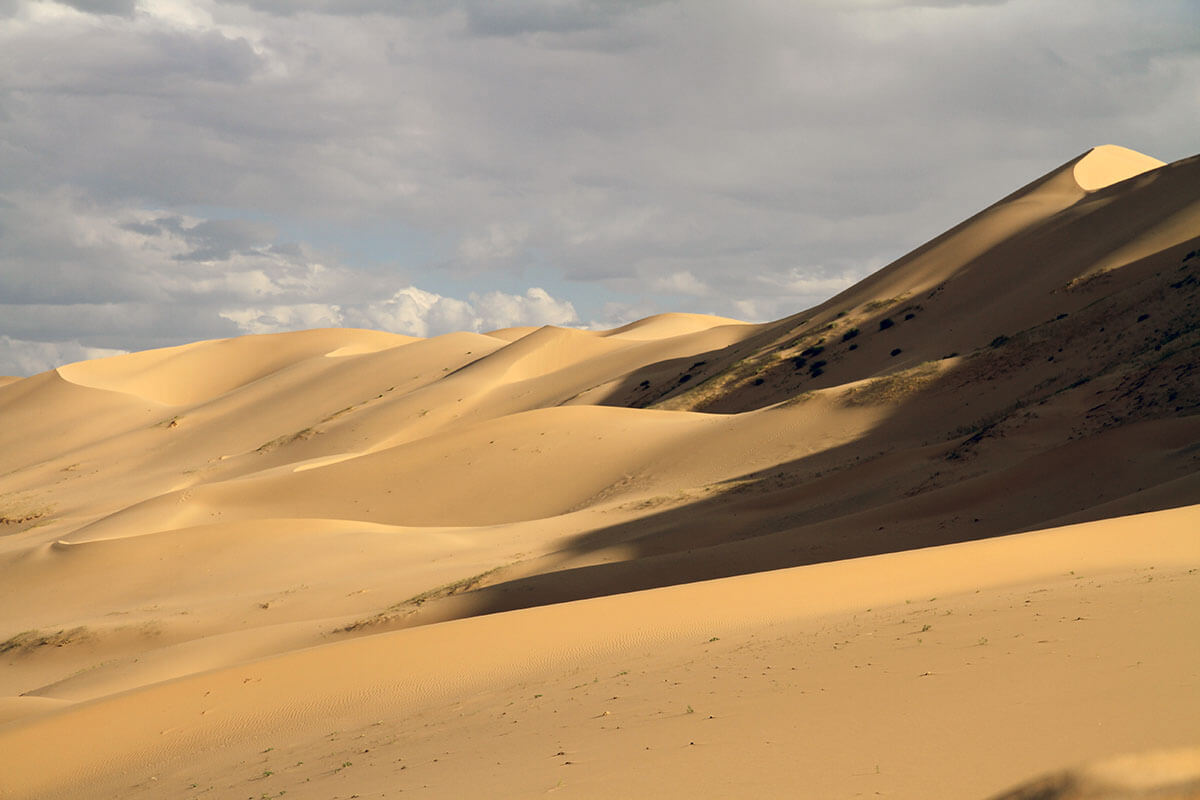
We’ll continue our camel-riding adventure across the Gobi Desert’s rolling sand dunes. Our first change in scenery will be Chono Kharaikh, a stream winding between the dunes. Out here, it will be just you and your thoughts in a land that seems to stretch forever. Sometimes, you find yourself in the middle of nowhere—and sometimes, in the middle of nowhere, you truly find yourself.
Activities:
- Camel riding
Camel Riding to Chono Kharaikh
We’ll continue our camel-riding adventure across the Gobi Desert’s rolling sand dunes. Our first change in scenery will be Chono Kharaikh, a stream winding between the dunes. Out here, it will be just you and your thoughts in a land that seems to stretch forever. Sometimes, you find yourself in the middle of nowhere—and sometimes, in the middle of nowhere, you truly find yourself.
Activities:
- Camel riding
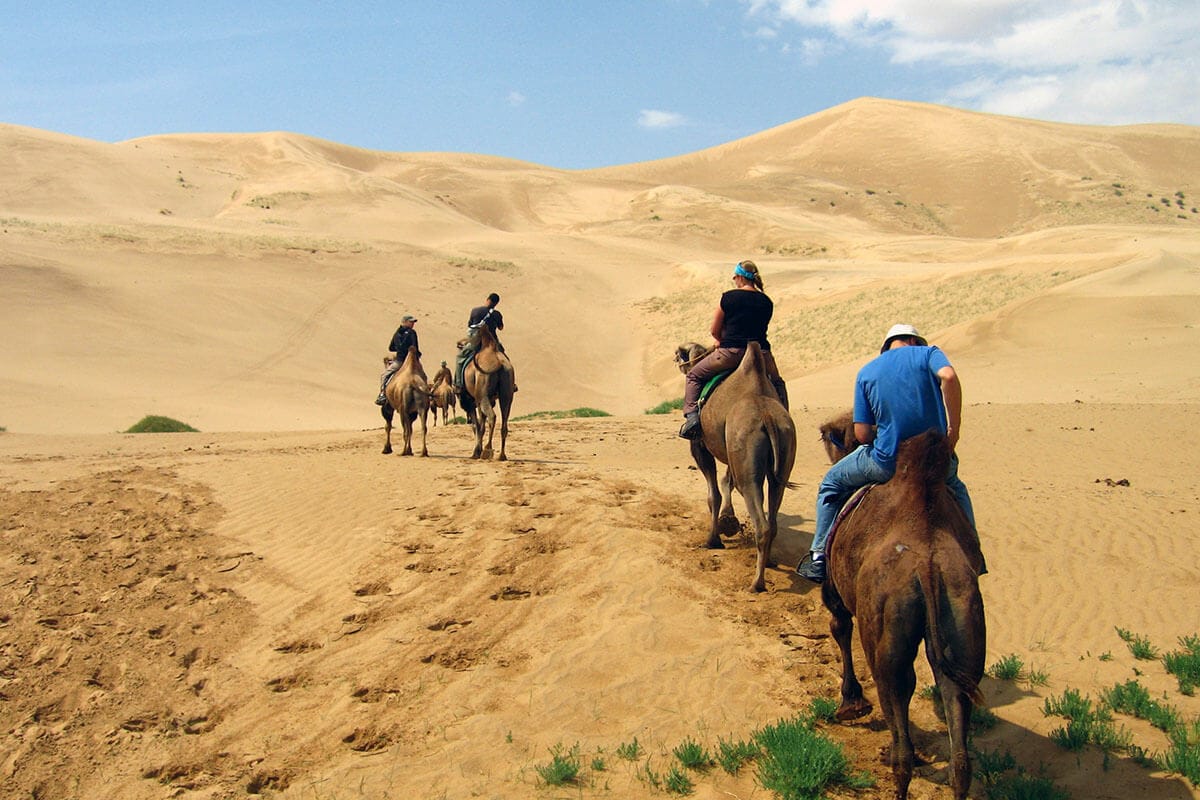
Today, we’ll ride to Red Hill and return along the same path, taking in the breathtaking scenery of the Gobi Desert. Watch as the wind reshapes the dunes, revealing shifting shades of yellow and white as the sunlight changes throughout the day.
Activities:
- Camel riding
Camel riding back to Red Hill
Today, we’ll ride to Red Hill and return along the same path, taking in the breathtaking scenery of the Gobi Desert. Watch as the wind reshapes the dunes, revealing shifting shades of yellow and white as the sunlight changes throughout the day.
Activities:
- Camel riding
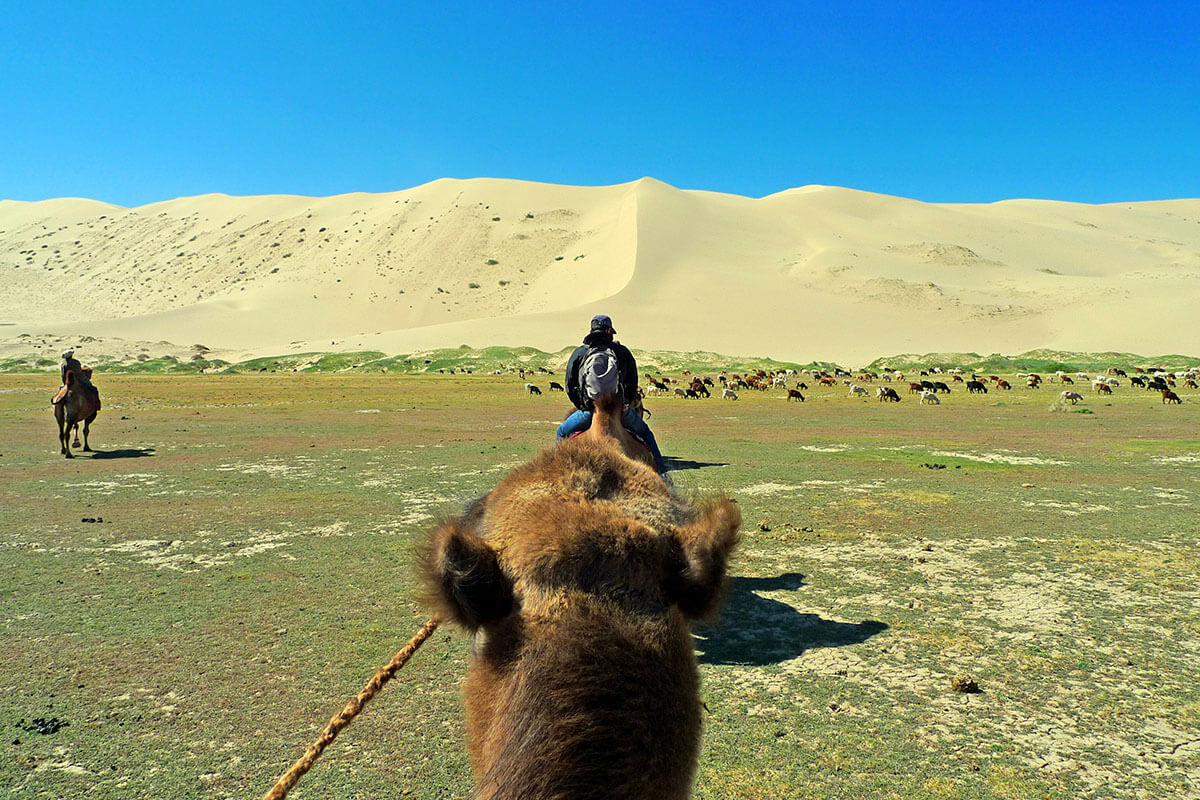
On our final day of camel riding, we’ll return to the “Singing Sands” to visit the camel-breeding family. In the afternoon, we’ll bid them farewell before heading to our Ger camp.
Activities:
- Camel riding
Camel riding back to the “Singing Sands”
On our final day of camel riding, we’ll return to the “Singing Sands” to visit the camel-breeding family. In the afternoon, we’ll bid them farewell before heading to our Ger camp.
Activities:
- Camel riding
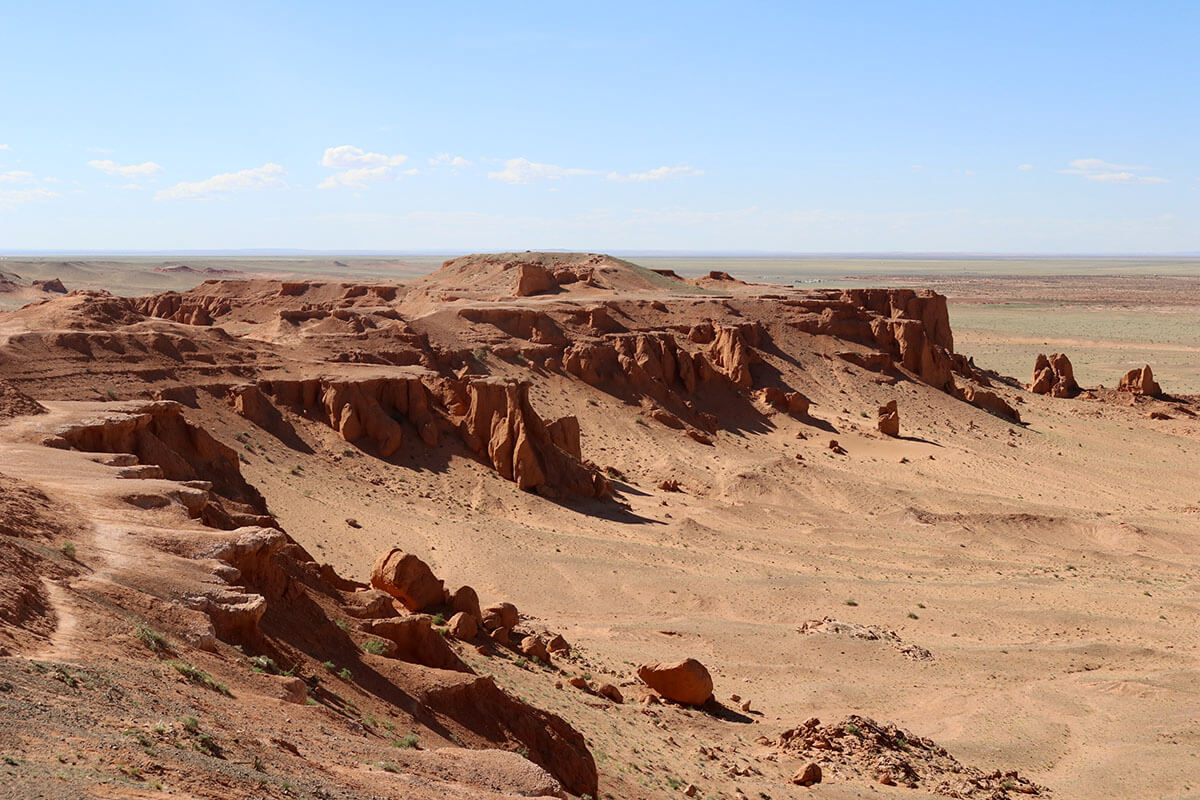
Our journey today will take us to Bayanzag, commonly known as the "Flaming Cliffs." This extraordinary site is where the renowned palaeontologist Roy Chapman Andrews discovered dinosaur bones and eggs. The scenery showcases a breathtaking mix of red sand, rugged formations, and greenery. We will wander around the cliffs, explore the area, visit the museum, and learn about the discoveries and expeditions from the early 20th century.
Activities:
- Explore the Bayanzag cliffs, the site where dinosaur skeletons and eggs were unearthed
Drive to Bayanzag/Flaming Cliffs
Our journey today will take us to Bayanzag, commonly known as the "Flaming Cliffs." This extraordinary site is where the renowned palaeontologist Roy Chapman Andrews discovered dinosaur bones and eggs. The scenery showcases a breathtaking mix of red sand, rugged formations, and greenery. We will wander around the cliffs, explore the area, visit the museum, and learn about the discoveries and expeditions from the early 20th century.
Activities:
- Explore the Bayanzag cliffs, the site where dinosaur skeletons and eggs were unearthed
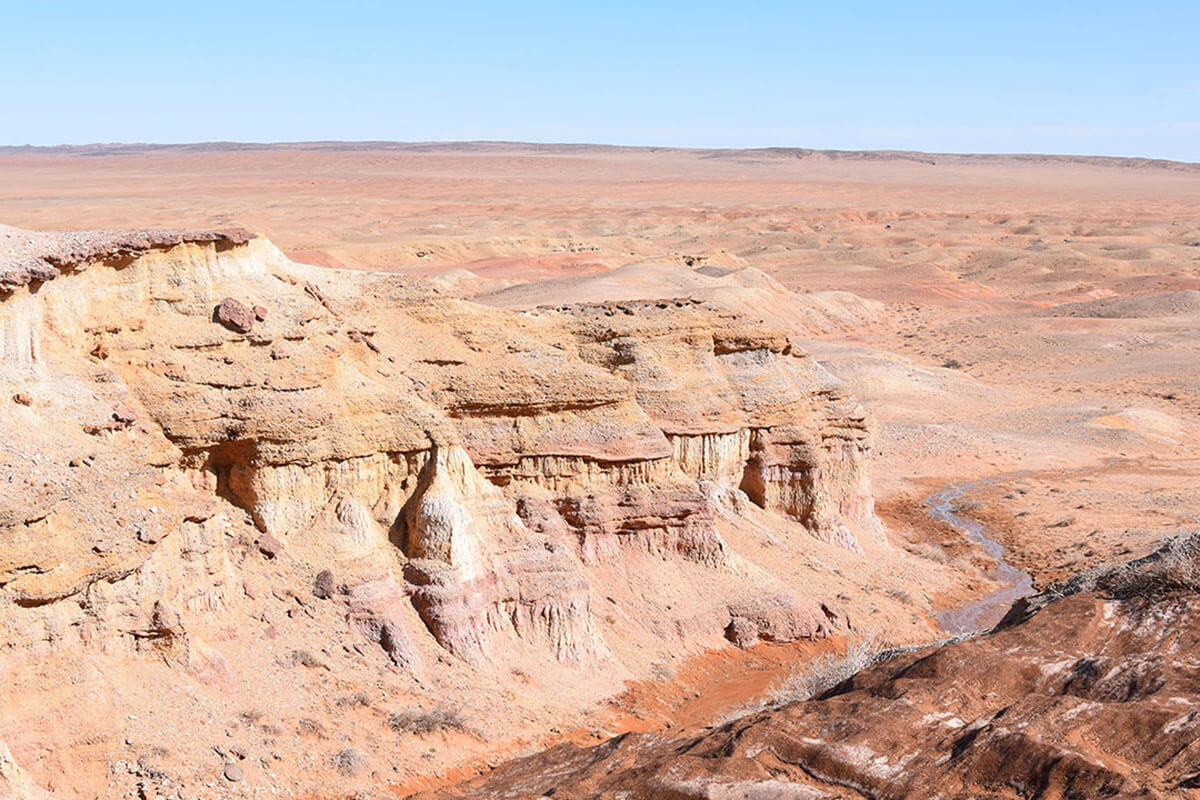
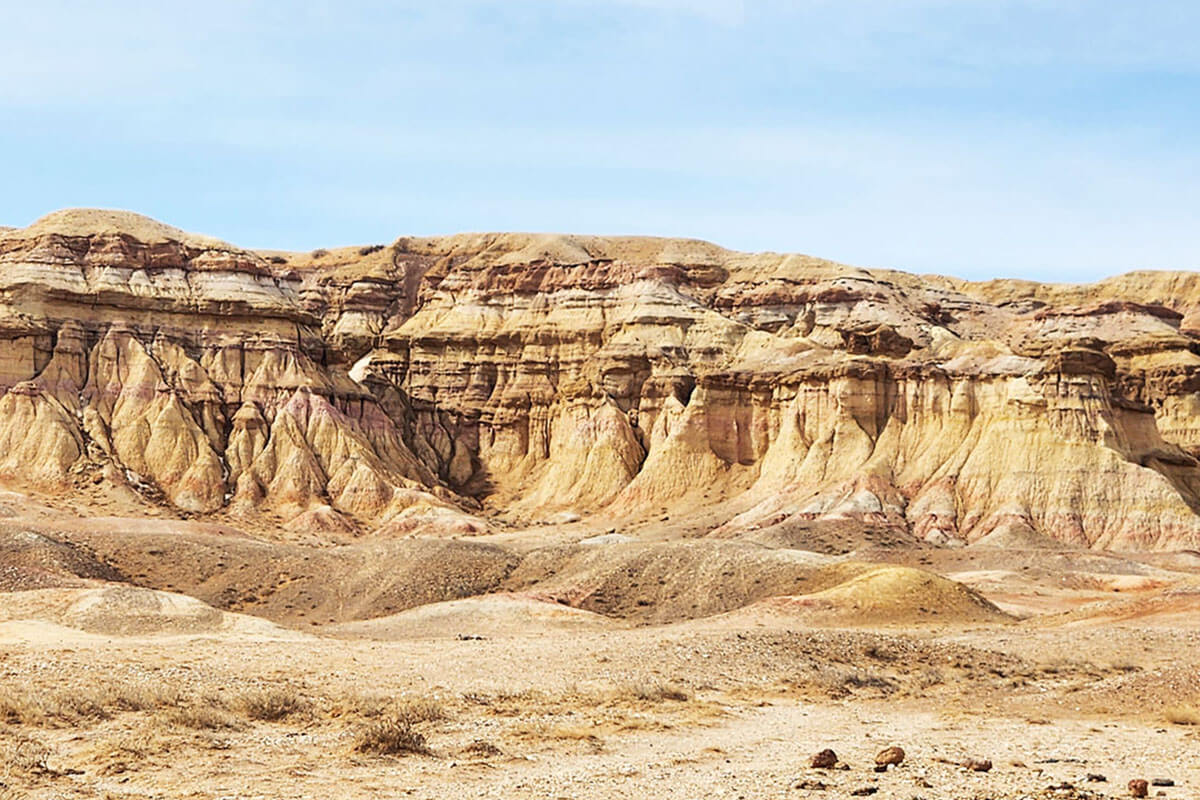
After breakfast, we will set off on an adventure to the Gobi Desert. The scenery will shift dramatically from lush green grasslands to rugged, lifeless terrain. We expect to arrive at Tsagaan Suvraga by the afternoon. This impressive cliff rises 30 meters high and stretches 100 meters wide, with the wind having intricately shaped this extraordinary formation over millennia.
From a distance, Tsagaan Suvraga resembles the remnants of an ancient town, complete with crumbling structures. Ancient illustrations capture scenes of people hunting ibex with long bows, while petroglyphs of wild animals and cattle are etched into the rocks. Additionally, the caves in this area showcase various Turkic inscriptions, seals, and images.
A fissure stretches from east to west, cutting down from the upper slopes of a mountain into the steppe. Through this crack, one can observe strong mud columns rising from below. The vast chasm resembles the gaping jaws of a mythical creature. Some caves feature multiple chambers, including one that extends over 70 meters in length.
Activities:
- Explore the majestic Tsagaan Suvarga cliffs
Tsagaan Suvarga
After breakfast, we will set off on an adventure to the Gobi Desert. The scenery will shift dramatically from lush green grasslands to rugged, lifeless terrain. We expect to arrive at Tsagaan Suvraga by the afternoon. This impressive cliff rises 30 meters high and stretches 100 meters wide, with the wind having intricately shaped this extraordinary formation over millennia.
From a distance, Tsagaan Suvraga resembles the remnants of an ancient town, complete with crumbling structures. Ancient illustrations capture scenes of people hunting ibex with long bows, while petroglyphs of wild animals and cattle are etched into the rocks. Additionally, the caves in this area showcase various Turkic inscriptions, seals, and images.
A fissure stretches from east to west, cutting down from the upper slopes of a mountain into the steppe. Through this crack, one can observe strong mud columns rising from below. The vast chasm resembles the gaping jaws of a mythical creature. Some caves feature multiple chambers, including one that extends over 70 meters in length.
Activities:
- Explore the majestic Tsagaan Suvarga cliffs
It’s time to depart and head back to Ulaanbaatar, the capital of Mongolia. The afternoon is yours to explore at your leisure. Later, you’ll enjoy a mesmerizing cultural performance, featuring skilled contortionists, powerful throat singers, and vibrant traditional dances that capture the essence of Mongolia’s rich cultural heritage.
Activities:
- Attend a folklore show featuring throat singers
- Shop for souvenir or cashmere. Optional
Ulaanbaatar
It’s time to depart and head back to Ulaanbaatar, the capital of Mongolia. The afternoon is yours to explore at your leisure. Later, you’ll enjoy a mesmerizing cultural performance, featuring skilled contortionists, powerful throat singers, and vibrant traditional dances that capture the essence of Mongolia’s rich cultural heritage.
Activities:
- Attend a folklore show featuring throat singers
- Shop for souvenir or cashmere. Optional
Similar Tours
Big Loop
- Moderate
- 17 days
- 14 / max
The Secret of Gobi Desert & the Winding Steppes of Mongolia
- Moderate
- 8 days
- 14 / max
Thousand Camel Festival in the Gobi Desert
- Moderate
- 7 days
- 14 / max
Treasure of Northern Gobi Desert
- Moderate
- 7 days
- 13 / max

Thousand Camel Festival in the Gobi Desert
- Moderate
- 7 days
- 14 / max
Gobi Desert to Khovsgol Lake
- Moderate
- 6 days
- 14 / max
Gobi Desert in Winter
- Moderate
- 9 days
Self Drive to Gobi Desert & Orkhon valley
- Moderate
- 12 days