Gobi Desert in Winter
Tour Highlights:
• Snow-dusted sand dunes: Unique contrast of golden dunes capped with snow, especially at Khongoryn Els.
• Frozen Yolyn Am (Vulture Valley): Deep gorge with dramatic ice formations and frozen streams.
• Wildlife spotting: Chance to see wild ibex, gazelles, foxes, and birds of prey in a quieter season.
• Stark winter landscapes: Vast open steppe and desert with sharp light, clear skies, and little human presence.
• Nomadic winter camps: Insight into how herder families live in extreme cold, with livestock shelters and winter gers.
• Peaceful travel experience: Few tourists, offering solitude and untouched scenery.
• Stargazing: Exceptionally clear winter skies perfect for night photography.
• Cultural encounters: Enjoying hot meals, Mongolian tea, and hospitality in the warmth of gers
Genghis Khan Statue & Gorkhi-Terelj National Park
Baga Gazriin Chuluu and Choir Monastery
Tsagaan Suvarga
Yolyn Am
Khongoryn Els
Bayanzag, Flaming Cliffs
Ongiin monastery
Karakorum, the former Mongolian capital
Drive back to Ulaanbaatar


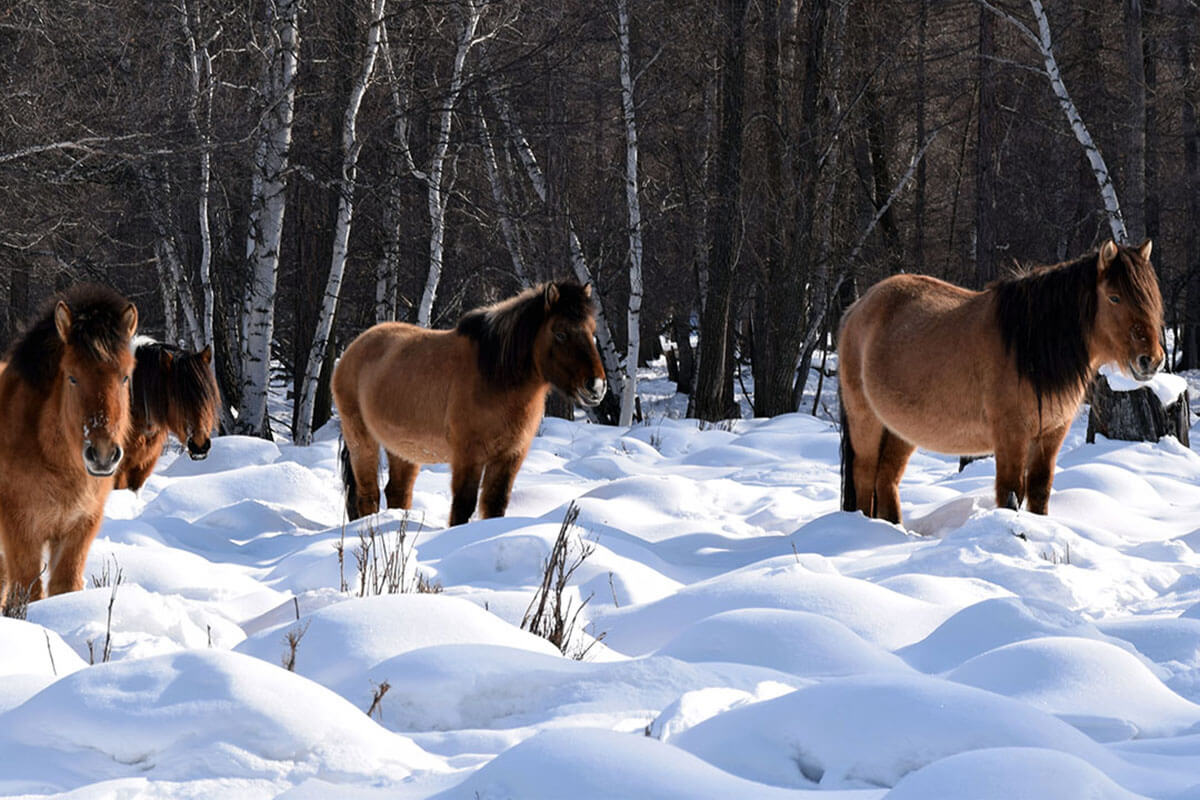
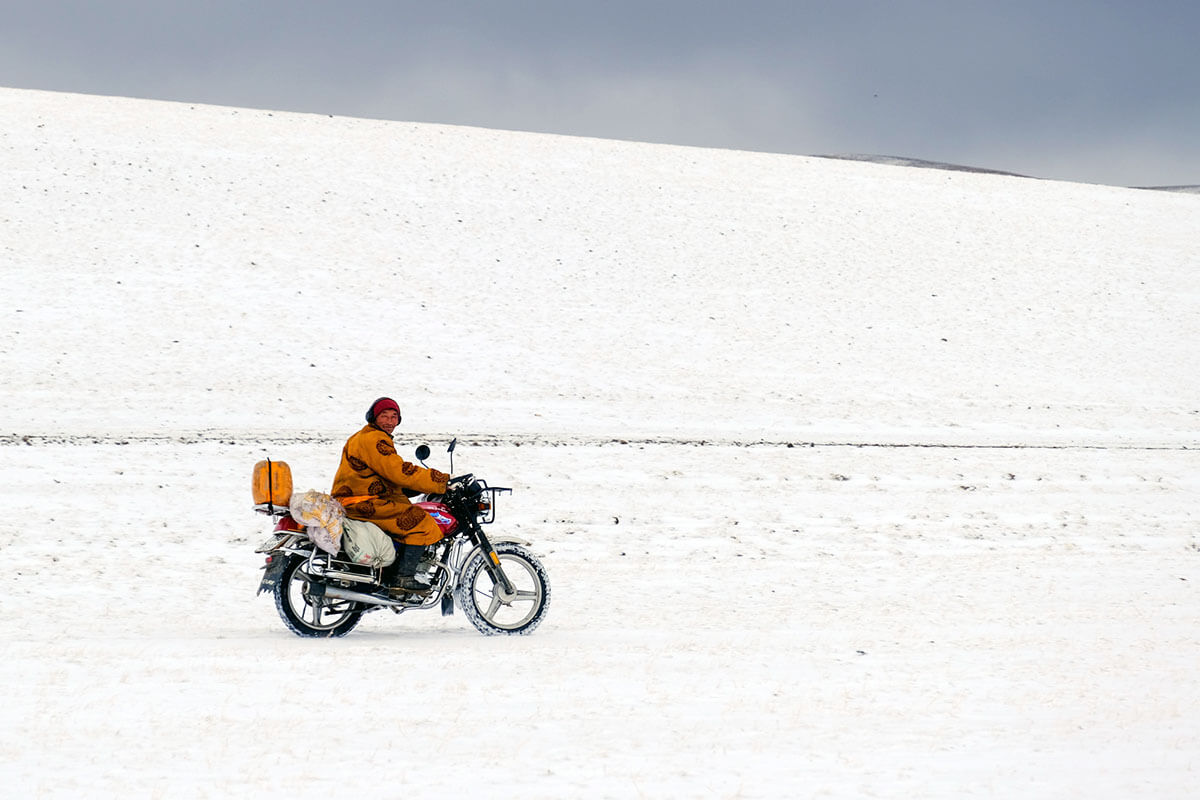
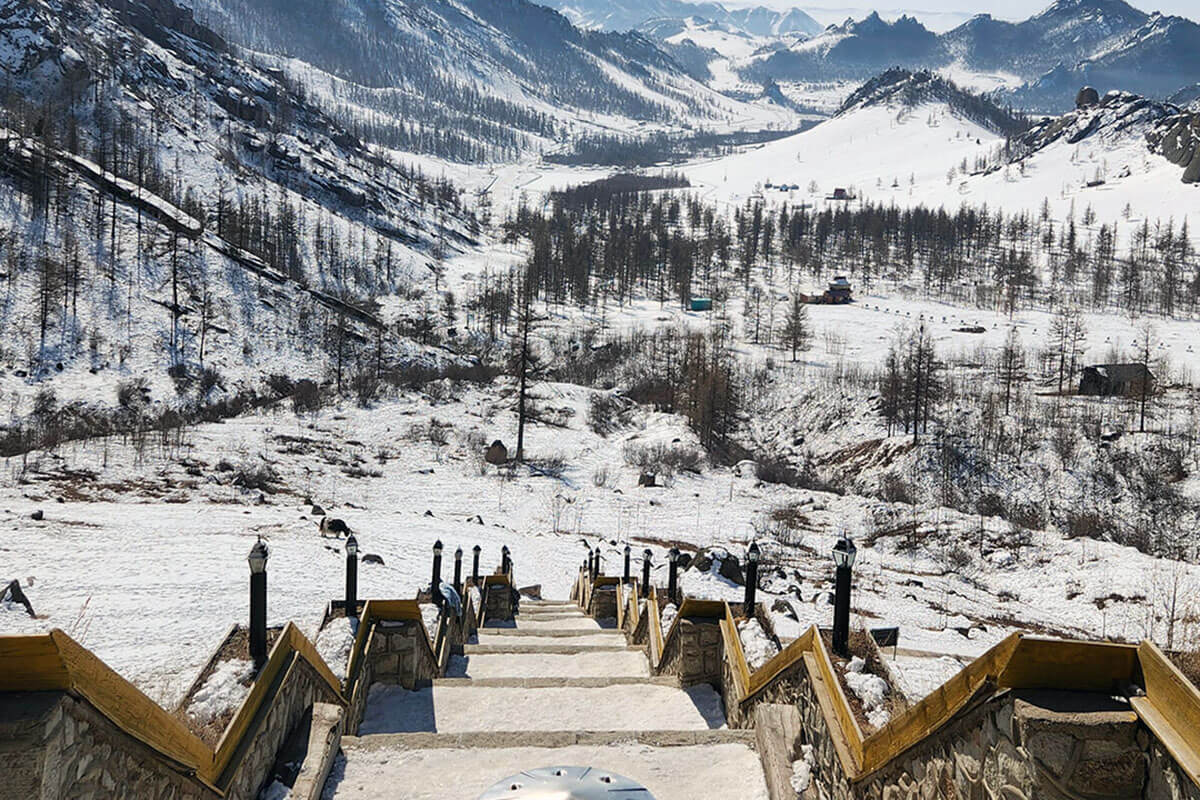
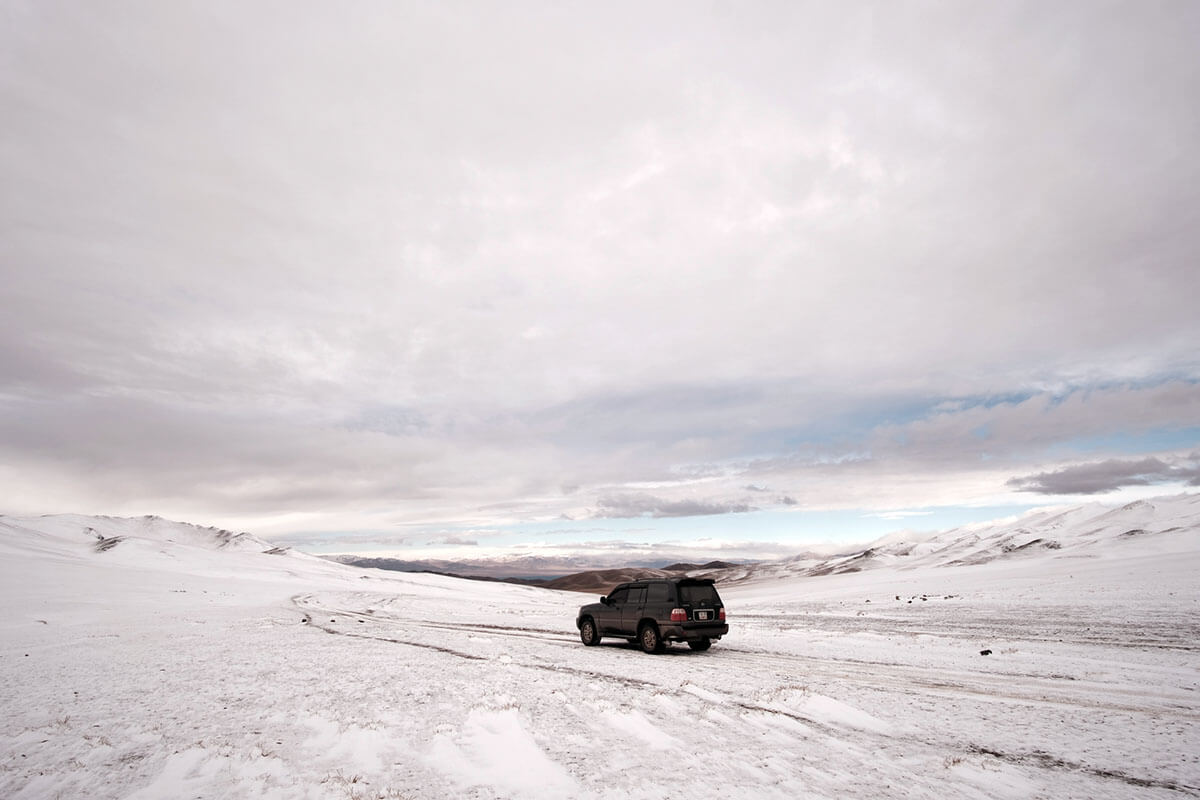
Day To Day Itinerary
We'll begin our day with an early departure from Ulaanbaatar, setting out toward the stunning Terelj National Park, located just 70 kilometers from the capital. As we drive, the landscape unfolds into a scenic valley framed by lush, forested hills and striking granite cliffs. The area comes alive with vibrant wildflowers, while herds of yaks, horses, goats, and sheep graze peacefully in the open fields. Terelj's picturesque setting—marked by dramatic rock formations, pine forests, and a gently flowing river—makes it a perfect destination for hiking, horseback riding, swimming, or simply relaxing and taking in the views. Our first destination will be the iconic Genghis Khan Monument—an awe-inspiring aluminium statue of the legendary leader on horseback. Visitors can ascend to the top for panoramic views of the vast surrounding landscape. Nearby, a small but insightful museum provides a comprehensive look into the Great Mongol Empire, highlighting the lineage and conquests of the Khans. We’ll then continue to Turtle Rock, a naturally formed granite outcrop resembling a turtle, followed by a visit to the Aryaval Monastery. Nestled at the foot of a mountain, this peaceful meditation site offers excellent opportunities for hiking, climbing, and more horseback riding in a serene setting. In the afternoon, prepare for a true winter adventure—dog sledding across a frozen, glimmering river. Though a relatively recent addition to Mongolia, dog sledding has become a beloved winter pastime, especially among Ulaanbaatar’s residents. This thrilling ride is more than just a sport; it’s a chance to immerse yourself in magical winter landscapes and hear firsthand stories from experienced guides and locals. Before the ride begins, you'll have time to meet the dogs, take photos, and enjoy a bit of socializing. Then, you’ll set off on a two-hour sledding journey through snow-covered terrain, with a brief stop halfway to soak in the natural beauty, snap some unforgettable photos, and give the dogs some well-earned belly rubs. Later in the day, we’ll continue exploring the winter wonderland with a scenic horseback riding tour, offering another way to connect with Mongolia’s timeless beauty and nomadic traditions.
- Visit the Genghis khan statue
- Explore the Aryapal monastery
- See Turtle rock
- Go horseback riding
- Enjoy dog sledding
Genghis Khan Statue & Gorkhi-Terelj National Park
We'll begin our day with an early departure from Ulaanbaatar, setting out toward the stunning Terelj National Park, located just 70 kilometers from the capital. As we drive, the landscape unfolds into a scenic valley framed by lush, forested hills and striking granite cliffs. The area comes alive with vibrant wildflowers, while herds of yaks, horses, goats, and sheep graze peacefully in the open fields. Terelj's picturesque setting—marked by dramatic rock formations, pine forests, and a gently flowing river—makes it a perfect destination for hiking, horseback riding, swimming, or simply relaxing and taking in the views. Our first destination will be the iconic Genghis Khan Monument—an awe-inspiring aluminium statue of the legendary leader on horseback. Visitors can ascend to the top for panoramic views of the vast surrounding landscape. Nearby, a small but insightful museum provides a comprehensive look into the Great Mongol Empire, highlighting the lineage and conquests of the Khans. We’ll then continue to Turtle Rock, a naturally formed granite outcrop resembling a turtle, followed by a visit to the Aryaval Monastery. Nestled at the foot of a mountain, this peaceful meditation site offers excellent opportunities for hiking, climbing, and more horseback riding in a serene setting. In the afternoon, prepare for a true winter adventure—dog sledding across a frozen, glimmering river. Though a relatively recent addition to Mongolia, dog sledding has become a beloved winter pastime, especially among Ulaanbaatar’s residents. This thrilling ride is more than just a sport; it’s a chance to immerse yourself in magical winter landscapes and hear firsthand stories from experienced guides and locals. Before the ride begins, you'll have time to meet the dogs, take photos, and enjoy a bit of socializing. Then, you’ll set off on a two-hour sledding journey through snow-covered terrain, with a brief stop halfway to soak in the natural beauty, snap some unforgettable photos, and give the dogs some well-earned belly rubs. Later in the day, we’ll continue exploring the winter wonderland with a scenic horseback riding tour, offering another way to connect with Mongolia’s timeless beauty and nomadic traditions.
- Visit the Genghis khan statue
- Explore the Aryapal monastery
- See Turtle rock
- Go horseback riding
- Enjoy dog sledding
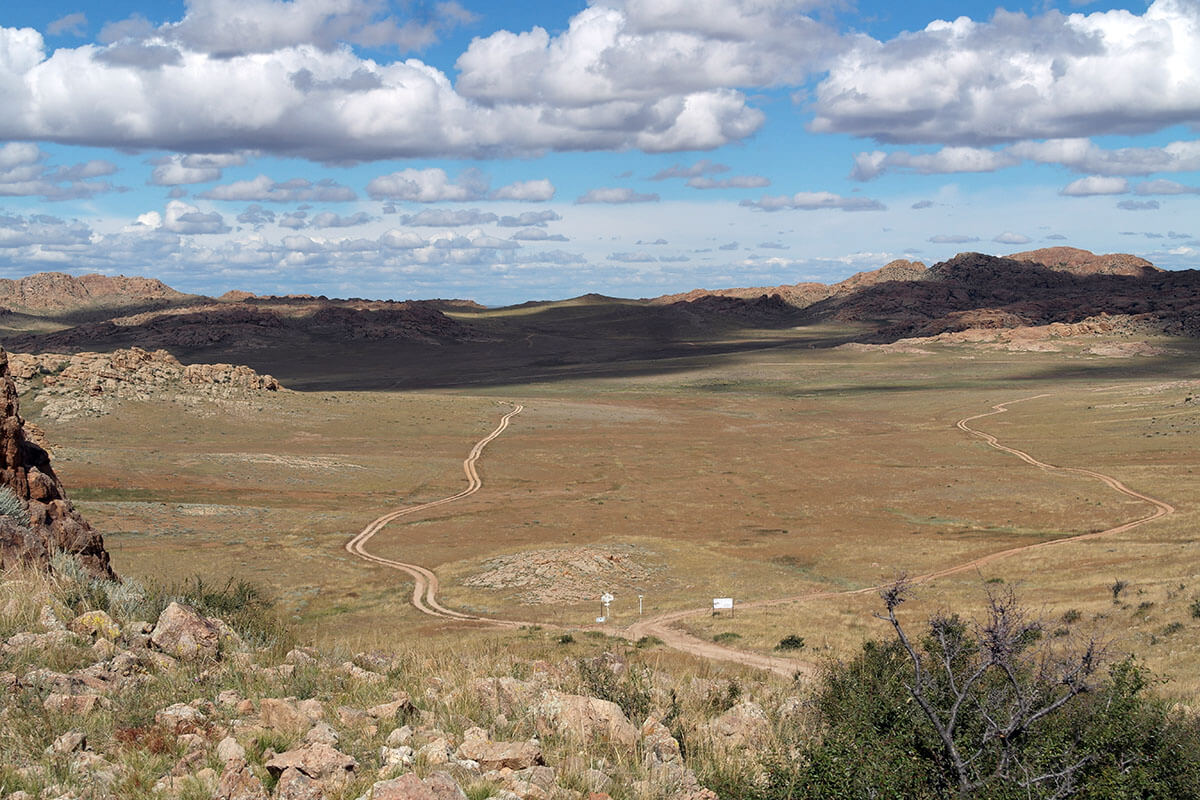
Discover the captivating landscape of Baga Gazriin Chuluu, a dramatic granite formation rising from the heart of Mongolia’s sandy plains. Amidst this vast open terrain lie the remnants of Delgeriin Choir Monastery, a modest but historically rich site. Step inside a traditional ger and find yourself in a remarkable twelve-sided structure, ornately decorated and intricately carved. This unique ger served as a winter sanctuary for monks, offering a warm space for chanting when the stone monastery grew too cold. In the late afternoon, embark on a journey through this remarkable area. Whether by vehicle or on foot, you’ll explore the towering granite formations—stacked like natural sculptures—and uncover the peaceful ruins of the old monastery tucked within a quiet, sheltered valley.
- Visit the historic the Choir Monastery
- Discover the stunning rock formation of Baga Gazar
Baga Gazriin Chuluu and Choir Monastery
Discover the captivating landscape of Baga Gazriin Chuluu, a dramatic granite formation rising from the heart of Mongolia’s sandy plains. Amidst this vast open terrain lie the remnants of Delgeriin Choir Monastery, a modest but historically rich site. Step inside a traditional ger and find yourself in a remarkable twelve-sided structure, ornately decorated and intricately carved. This unique ger served as a winter sanctuary for monks, offering a warm space for chanting when the stone monastery grew too cold. In the late afternoon, embark on a journey through this remarkable area. Whether by vehicle or on foot, you’ll explore the towering granite formations—stacked like natural sculptures—and uncover the peaceful ruins of the old monastery tucked within a quiet, sheltered valley.
- Visit the historic the Choir Monastery
- Discover the stunning rock formation of Baga Gazar
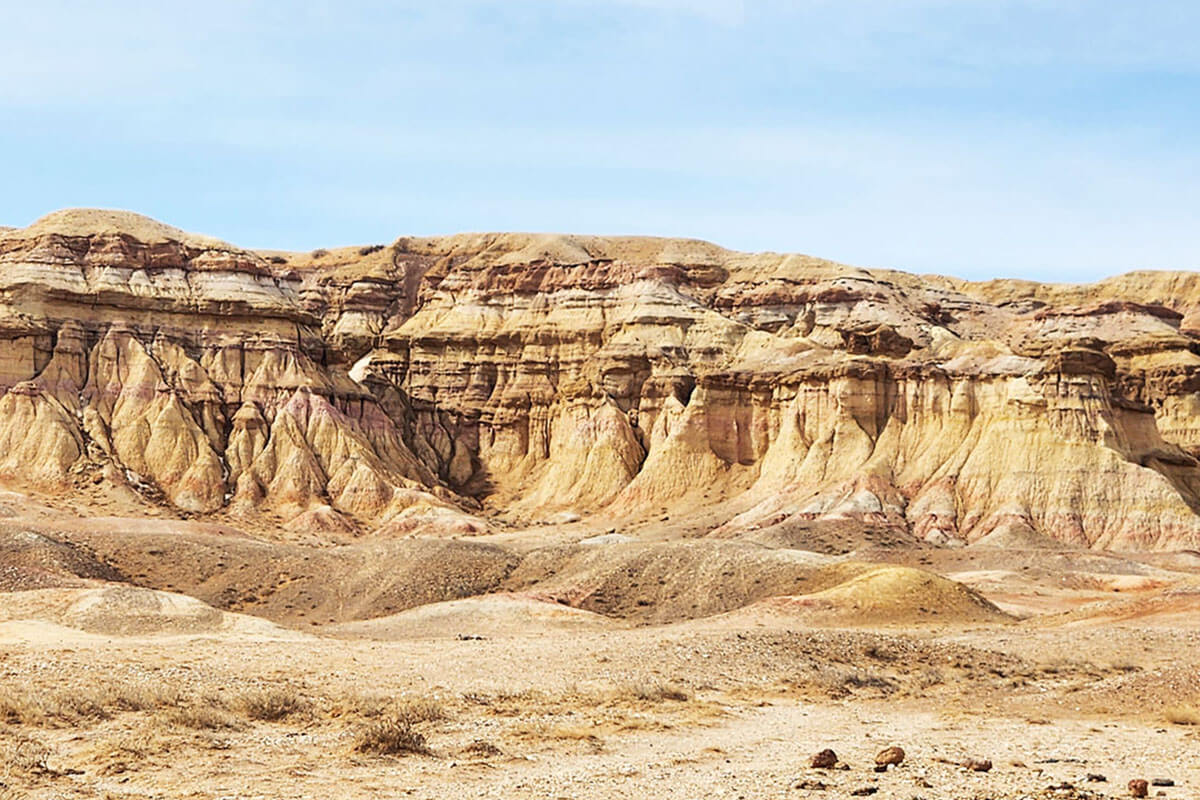
Rising 30 meters high and spanning 100 meters across, the dramatic cliffs of Tsagaan Suvraga have been sculpted by wind and time into an awe-inspiring natural wonder. From afar, the formation resembles the ruins of an ancient city, with crumbling towers and walls shaped by the elements.
This region is rich in history and culture—ancient rock art depicts scenes of ibex hunters with longbows, while petroglyphs of wild animals and livestock are etched into the stone. Nearby caves reveal even more, with Turkic inscriptions, seals, and symbolic images carved into their walls.
A deep fissure cuts east to west across the terrain, slicing from the upper mountain slopes into the open steppe. Through this natural crevice, massive mud columns rise like pillars from the earth, creating the illusion of a mythical beast’s open jaws. Some of the caves in the area contain multiple chambers, including one that stretches over 70 meters deep into the rock, offering a sense of mystery and wonder for explorers.
- Explore the majestic Tsagaan Suvarga cliffs
Tsagaan Suvarga
Rising 30 meters high and spanning 100 meters across, the dramatic cliffs of Tsagaan Suvraga have been sculpted by wind and time into an awe-inspiring natural wonder. From afar, the formation resembles the ruins of an ancient city, with crumbling towers and walls shaped by the elements.
This region is rich in history and culture—ancient rock art depicts scenes of ibex hunters with longbows, while petroglyphs of wild animals and livestock are etched into the stone. Nearby caves reveal even more, with Turkic inscriptions, seals, and symbolic images carved into their walls.
A deep fissure cuts east to west across the terrain, slicing from the upper mountain slopes into the open steppe. Through this natural crevice, massive mud columns rise like pillars from the earth, creating the illusion of a mythical beast’s open jaws. Some of the caves in the area contain multiple chambers, including one that stretches over 70 meters deep into the rock, offering a sense of mystery and wonder for explorers.
- Explore the majestic Tsagaan Suvarga cliffs

Today, we embark on a journey to Dalanzadgad, the gateway to Mongolia’s South Gobi province. Spanning both Mongolia and China, the Gobi Desert stretches an impressive 1,610 kilometers from southwest to northeast and 800 kilometers from north to south. Covering an area of 1,295,000 square kilometers, it is the largest desert in Asia and the fifth largest in the world. Unlike the image of endless sand dunes, much of the Gobi is a rocky, barren expanse shaped by wind and time. In winter, the Gobi transforms into a cold desert, with frost and snow blanketing its dunes. Situated on a high plateau between 910 and 1,520 meters above sea level, its elevation contributes to extreme temperatures—ranging from –40°C in winter to +50°C in summer. Despite its arid nature, the Gobi receives around 194 millimeters of rainfall per year, with snow from the distant Siberian Steppes occasionally adding moisture during the colder months. Our adventure continues through the dramatic Altai Mountain Range, where we’ll explore the breathtaking gorge of Yolyn Am, located in Gobi Gurvansaikhan National Park. Once carved by ancient rivers, this deep, narrow valley is a cool oasis in the desert and offers a chance to spot native wildlife such as Wild Argali sheep, Ibex, desert gazelles, and Golden Eagles soaring above.
We’ll also visit the park’s small but informative natural history museum, home to dinosaur fossils and displays of the region’s unique plants and animals—a glimpse into both the prehistoric and living wonders of the Gobi.
- Explore the park’s natural history museum
- Visit Yolyn am gorge
- Enjoy a scenic hike through the gorge
Yolyn Am
Today, we embark on a journey to Dalanzadgad, the gateway to Mongolia’s South Gobi province. Spanning both Mongolia and China, the Gobi Desert stretches an impressive 1,610 kilometers from southwest to northeast and 800 kilometers from north to south. Covering an area of 1,295,000 square kilometers, it is the largest desert in Asia and the fifth largest in the world. Unlike the image of endless sand dunes, much of the Gobi is a rocky, barren expanse shaped by wind and time. In winter, the Gobi transforms into a cold desert, with frost and snow blanketing its dunes. Situated on a high plateau between 910 and 1,520 meters above sea level, its elevation contributes to extreme temperatures—ranging from –40°C in winter to +50°C in summer. Despite its arid nature, the Gobi receives around 194 millimeters of rainfall per year, with snow from the distant Siberian Steppes occasionally adding moisture during the colder months. Our adventure continues through the dramatic Altai Mountain Range, where we’ll explore the breathtaking gorge of Yolyn Am, located in Gobi Gurvansaikhan National Park. Once carved by ancient rivers, this deep, narrow valley is a cool oasis in the desert and offers a chance to spot native wildlife such as Wild Argali sheep, Ibex, desert gazelles, and Golden Eagles soaring above.
We’ll also visit the park’s small but informative natural history museum, home to dinosaur fossils and displays of the region’s unique plants and animals—a glimpse into both the prehistoric and living wonders of the Gobi.
- Explore the park’s natural history museum
- Visit Yolyn am gorge
- Enjoy a scenic hike through the gorge

After a hearty breakfast, we’ll set off on a 180-kilometer drive westward to Khongoryn Els, home to Mongolia’s largest and most spectacular sand dunes. Towering up to 275 meters high and stretching more than 100 kilometers across, these massive dunes form graceful arcs and ridges, their sharp crests creating mesmerizing wave-like patterns. Framing this stunning desert landscape is the dark, rugged silhouette of Sevrey Mountain, providing a dramatic contrast to the golden sands. The Gobi Desert is known as the coldest desert in the world, with fierce winds sweeping across its open plains throughout autumn, winter, and spring. The harsh conditions have shaped a culture of resilience, requiring extraordinary adaptation and endurance. In this remote region, we’ll meet local camel-herding families, known for raising the iconic two-humped Bactrian camels. These nomadic families embody the spirit of the Gobi—humble, hardworking, and deeply connected to the land. You'll have the opportunity to learn about their traditional way of life, shaped by both the challenges and beauty of the desert.
- Discover the majestic Khongoryn Els sand dunes
- Climb to the tallest dune
- Visit a traditional camel-herding family
Khongoryn Els
After a hearty breakfast, we’ll set off on a 180-kilometer drive westward to Khongoryn Els, home to Mongolia’s largest and most spectacular sand dunes. Towering up to 275 meters high and stretching more than 100 kilometers across, these massive dunes form graceful arcs and ridges, their sharp crests creating mesmerizing wave-like patterns. Framing this stunning desert landscape is the dark, rugged silhouette of Sevrey Mountain, providing a dramatic contrast to the golden sands. The Gobi Desert is known as the coldest desert in the world, with fierce winds sweeping across its open plains throughout autumn, winter, and spring. The harsh conditions have shaped a culture of resilience, requiring extraordinary adaptation and endurance. In this remote region, we’ll meet local camel-herding families, known for raising the iconic two-humped Bactrian camels. These nomadic families embody the spirit of the Gobi—humble, hardworking, and deeply connected to the land. You'll have the opportunity to learn about their traditional way of life, shaped by both the challenges and beauty of the desert.
- Discover the majestic Khongoryn Els sand dunes
- Climb to the tallest dune
- Visit a traditional camel-herding family
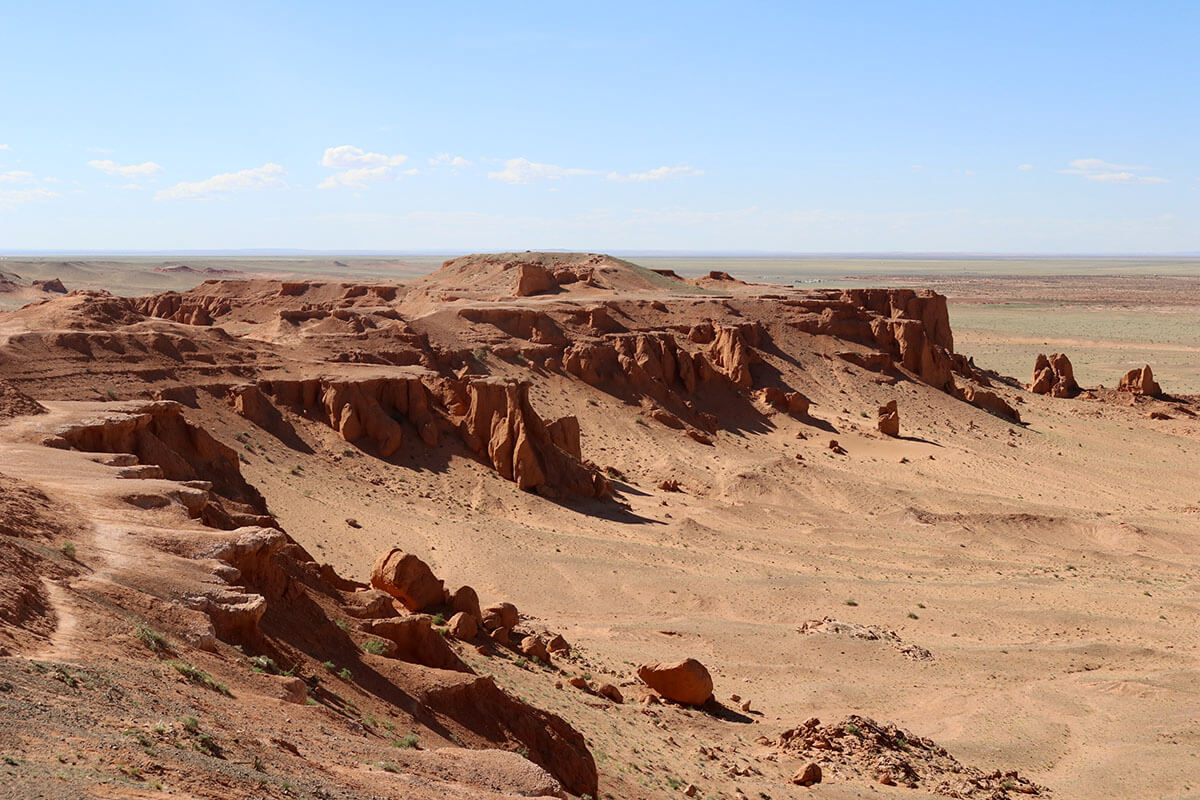
Today, we’ll travel to Bayanzag, famously known as the “Flaming Cliffs”—a site of major paleontological significance. It was here that explorer Roy Chapman Andrews made the groundbreaking discovery of dinosaur fossils and eggs, bringing global attention to the region. The area is named for its striking red sandstone cliffs, which glow brilliantly at sunset. Surrounded by a scenic blend of rocky formations, red sands, and desert shrubs, Bayanzag offers a truly unforgettable landscape. While here, we’ll take a leisurely walk along the cliffs, giving you time to explore, take photos, and absorb the natural beauty and historic significance of this iconic site.
- Explore the Bayanzag cliffs, the site where dinosaur skeletons and eggs were unearthed
Bayanzag, Flaming Cliffs
Today, we’ll travel to Bayanzag, famously known as the “Flaming Cliffs”—a site of major paleontological significance. It was here that explorer Roy Chapman Andrews made the groundbreaking discovery of dinosaur fossils and eggs, bringing global attention to the region. The area is named for its striking red sandstone cliffs, which glow brilliantly at sunset. Surrounded by a scenic blend of rocky formations, red sands, and desert shrubs, Bayanzag offers a truly unforgettable landscape. While here, we’ll take a leisurely walk along the cliffs, giving you time to explore, take photos, and absorb the natural beauty and historic significance of this iconic site.
- Explore the Bayanzag cliffs, the site where dinosaur skeletons and eggs were unearthed
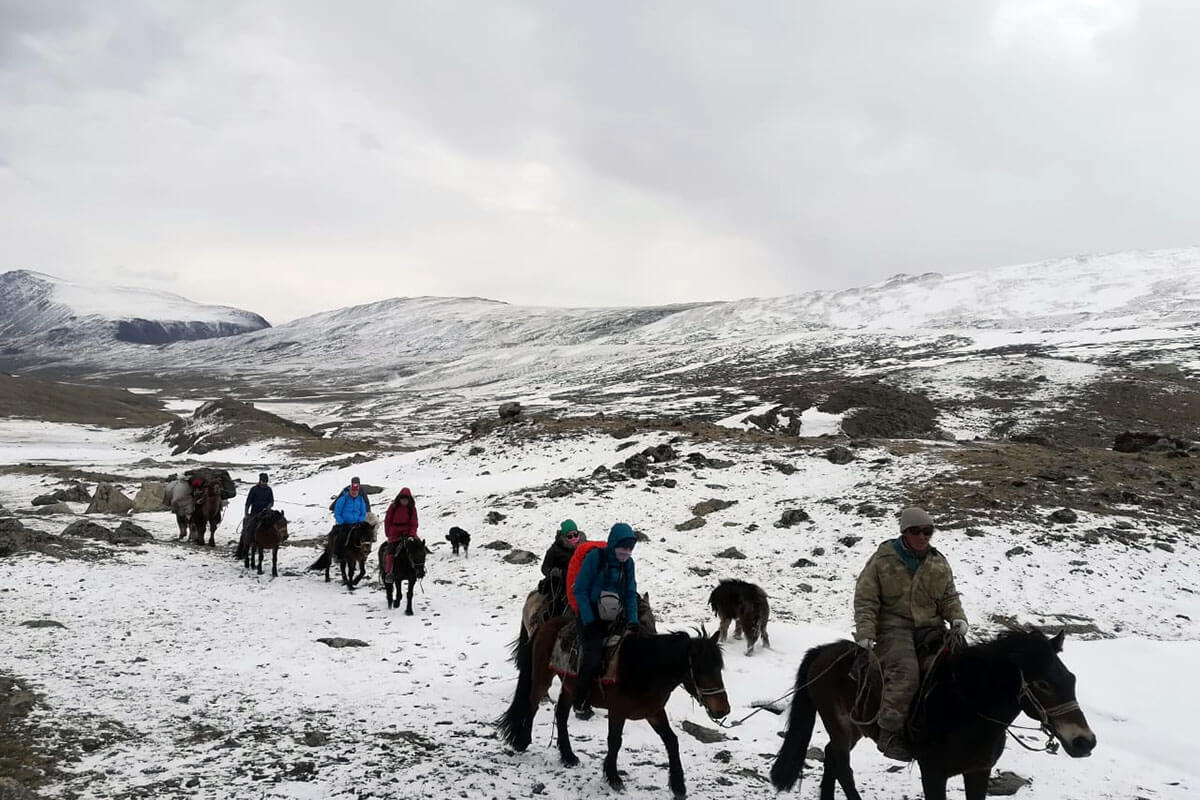
Today, you’ll visit Ongi Monastery, nestled along the serene Ongi River in northwest Mongolia. The peaceful Delger Khangai Mountains provide a stunning backdrop to this historic site. You’ll explore the southern complex, which includes various administrative buildings and 11 temples, and learn about the northern complex, founded in the 18th century, which once housed 17 temples and four Buddhist universities. Originally built in the 17th century, the monasteries were tragically destroyed in 1937, when they were home to over 1,000 monks. Today, a small monastery stands amid the ruins, and the Ger Museum nearby showcases artifacts and remnants from this significant spiritual center.
- Explore the remnants of the Ongi Monastery
Ongiin monastery
Today, you’ll visit Ongi Monastery, nestled along the serene Ongi River in northwest Mongolia. The peaceful Delger Khangai Mountains provide a stunning backdrop to this historic site. You’ll explore the southern complex, which includes various administrative buildings and 11 temples, and learn about the northern complex, founded in the 18th century, which once housed 17 temples and four Buddhist universities. Originally built in the 17th century, the monasteries were tragically destroyed in 1937, when they were home to over 1,000 monks. Today, a small monastery stands amid the ruins, and the Ger Museum nearby showcases artifacts and remnants from this significant spiritual center.
- Explore the remnants of the Ongi Monastery

Today, we explore Karakorum, the historic capital of Genghis Khan’s Mongol Empire in the 13th century. Founded in 1220 on the ruins of ancient Turug and Uigur cities in the Orkhon Valley, the city was completed 15 years later under Ugedei Khan. Known for its vibrant multiculturalism, Karakorum thrived as a political, trade, and cultural center from 1220 to 1260. A famed symbol of the city was the magnificent Silver Tree that once stood in Möngke Khan’s palace. Between 1260 and 1380, Karakorum lost its status as the capital when Kublai Khan moved the empire’s center to Beijing. It was then reduced to an administrative hub during the Yuan Dynasty. After the Yuan Dynasty’s fall in 1368, the government briefly returned to Mongolia, allowing Karakorum to regain some importance. However, in 1388, Ming forces destroyed the town, leaving little behind. In 1580, Abtai Sain Khan and Lord Tumenkhen sought guidance from the 3rd Dalai Lama on constructing a temple, leading to the restoration of the Main Zuu Temple at Erdene Zuu Monastery in 1588. Once a sprawling complex boasting 100 temples and over 1,000 lamas, today Erdene Zuu houses three remaining temples—the Dalai Lama Temple, the Zuu of Buddha, and the Lavrin Temple—all enclosed within sturdy walls measuring 400 by 400 meters. Visitors can freely explore these historic grounds. Nearby, the Karakorum Archaeological Museum offers a well-curated collection in a bright, thoughtfully arranged space with clear English descriptions. The museum displays hundreds of artifacts from the 13th and 14th centuries, alongside prehistoric tools, pottery, bronzes, coins, religious sculptures, and stone inscriptions from local digs. Embedded in the floor is a partially excavated kiln, and a scale model of Karakorum as it appeared in the 1250s—based on the accounts of the traveler William of Rubruck—helps bring the ancient city to life. Another exhibit features a Turkic noble tomb adorned with wall paintings, gold artifacts, and jewels, complemented by a short video about the burial site.
In addition to these historic highlights, you can visit Turtle Rock and Phallic Rock, both notable natural landmarks. Nearby, a small market offers an opportunity to browse and purchase works from local artists.
- Explore the Erdene Zuu monastery
- Discover the Karakorum Archaeological Museum
Karakorum, the former Mongolian capital
Today, we explore Karakorum, the historic capital of Genghis Khan’s Mongol Empire in the 13th century. Founded in 1220 on the ruins of ancient Turug and Uigur cities in the Orkhon Valley, the city was completed 15 years later under Ugedei Khan. Known for its vibrant multiculturalism, Karakorum thrived as a political, trade, and cultural center from 1220 to 1260. A famed symbol of the city was the magnificent Silver Tree that once stood in Möngke Khan’s palace. Between 1260 and 1380, Karakorum lost its status as the capital when Kublai Khan moved the empire’s center to Beijing. It was then reduced to an administrative hub during the Yuan Dynasty. After the Yuan Dynasty’s fall in 1368, the government briefly returned to Mongolia, allowing Karakorum to regain some importance. However, in 1388, Ming forces destroyed the town, leaving little behind. In 1580, Abtai Sain Khan and Lord Tumenkhen sought guidance from the 3rd Dalai Lama on constructing a temple, leading to the restoration of the Main Zuu Temple at Erdene Zuu Monastery in 1588. Once a sprawling complex boasting 100 temples and over 1,000 lamas, today Erdene Zuu houses three remaining temples—the Dalai Lama Temple, the Zuu of Buddha, and the Lavrin Temple—all enclosed within sturdy walls measuring 400 by 400 meters. Visitors can freely explore these historic grounds. Nearby, the Karakorum Archaeological Museum offers a well-curated collection in a bright, thoughtfully arranged space with clear English descriptions. The museum displays hundreds of artifacts from the 13th and 14th centuries, alongside prehistoric tools, pottery, bronzes, coins, religious sculptures, and stone inscriptions from local digs. Embedded in the floor is a partially excavated kiln, and a scale model of Karakorum as it appeared in the 1250s—based on the accounts of the traveler William of Rubruck—helps bring the ancient city to life. Another exhibit features a Turkic noble tomb adorned with wall paintings, gold artifacts, and jewels, complemented by a short video about the burial site.
In addition to these historic highlights, you can visit Turtle Rock and Phallic Rock, both notable natural landmarks. Nearby, a small market offers an opportunity to browse and purchase works from local artists.
- Explore the Erdene Zuu monastery
- Discover the Karakorum Archaeological Museum

Today, we will return to Ulaanbaatar.
Drive back to Ulaanbaatar
Today, we will return to Ulaanbaatar.
Similar Tours
Canoeing Orkhon Valley
- Moderate
- 15 days
- 13 / max
Big Loop
- Moderate
- 17 days
- 14 / max
The Secret of Gobi Desert & the Winding Steppes of Mongolia
- Moderate
- 8 days
- 14 / max
Thousand Camel Festival in the Gobi Desert
- Moderate
- 7 days
- 14 / max
Winter national parks
- Moderate
- 3 days
- 14 / max
Naadam Festival
- Easy
- 2 days
- 14 / max
Cradle of Mongolian Civilization
- Moderate
- 5 days
- 14 / max
Gobi Desert Camel Expedition
- Moderate
- 10 days
- 14 / max
Camel Trek through Central Mongolian Grasslands
- Moderate
- 6 days
- 14 / max
Treasure of Northern Gobi Desert
- Moderate
- 7 days
- 13 / max