Tour Highlights:
•Grassland Landscapes
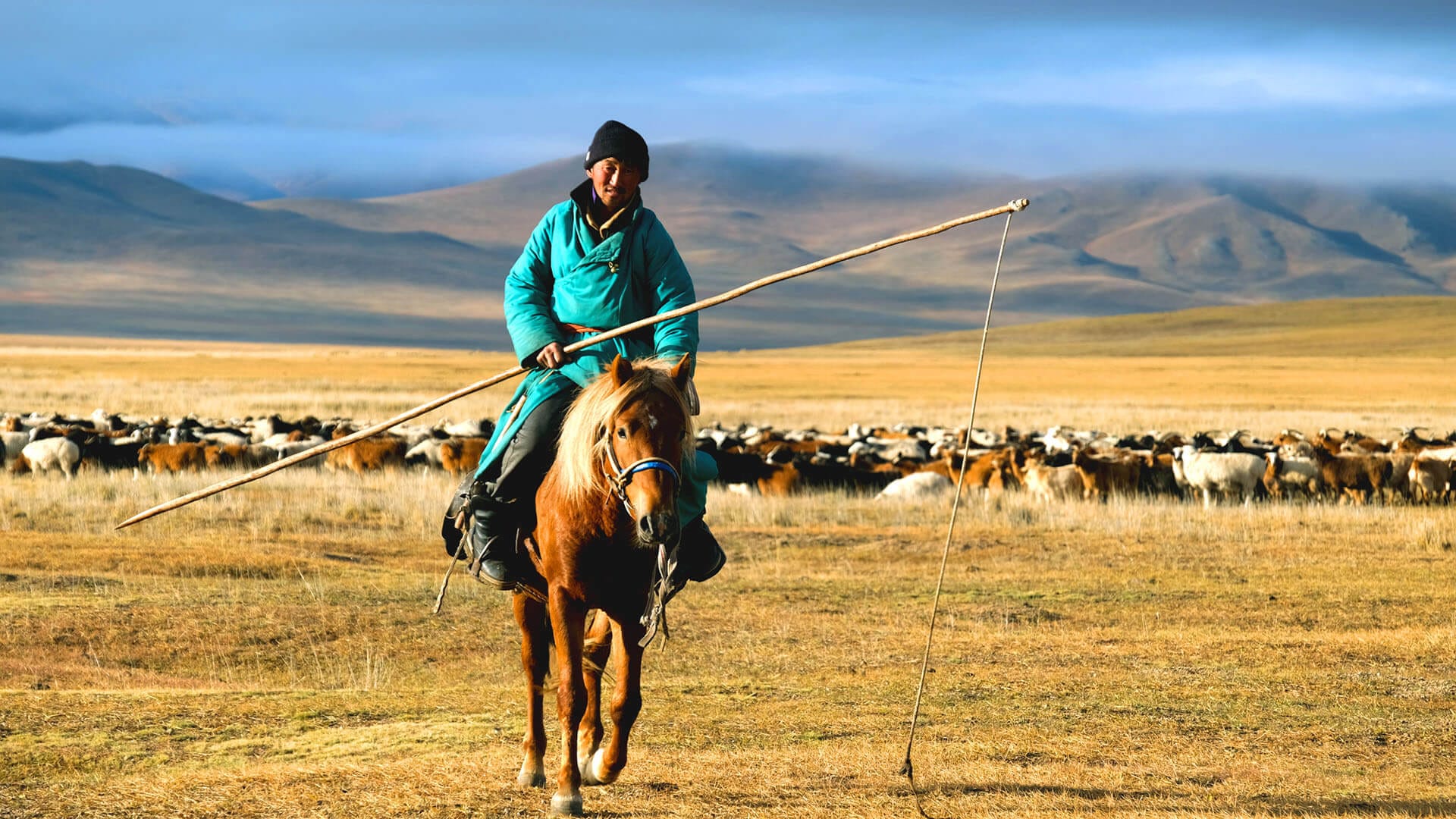
•Nomadic culture
•Karakorum, ancient capital of the Mongol Empire,
•Hustain Nuruu national park Przewalski horses,
•Elsen Tasarkhai, the sand dunes surrounded by the grassland
•Khogno Khan stunning granite mountain range
•Terelj national park
•Genghis Khan statue
2026 | ||
|---|---|---|
Guaranteed | 2025-05-25 | 2025-05-29 |
Guranteed | 2025-08-10 | 2025-08-14 |
Genghis Khan Statue & Gorkhi-Terelj National Park
Khustai National Park
Karakorum
Khogno Khan Mountains and Elsen Tasarkhai
Drive back to Ulaanbaatar

Day To Day Itinerary
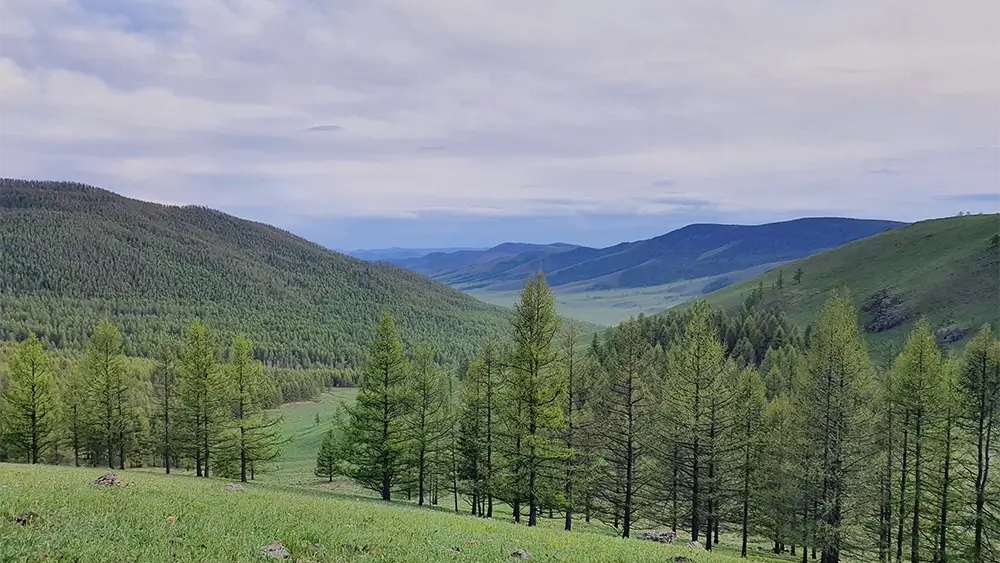
We’ll set off early in the morning from Ulaanbaatar, traveling 70 kilometers east to the breathtaking Terelj National Park. Our route winds through a scenic valley framed by lush, forested hills and dramatic granite cliffs. Along the way, we’ll pass fields alive with colorful wildflowers and spot herds of yaks, horses, goats, and sheep peacefully grazing in the open pastures.
Terelj is a stunning natural escape, known for its striking granite rock formations, towering pine trees, and a gentle river that meanders through the landscape. Whether you're in the mood for hiking, horseback riding, or simply relaxing and taking in the serene views, this park offers the perfect setting.
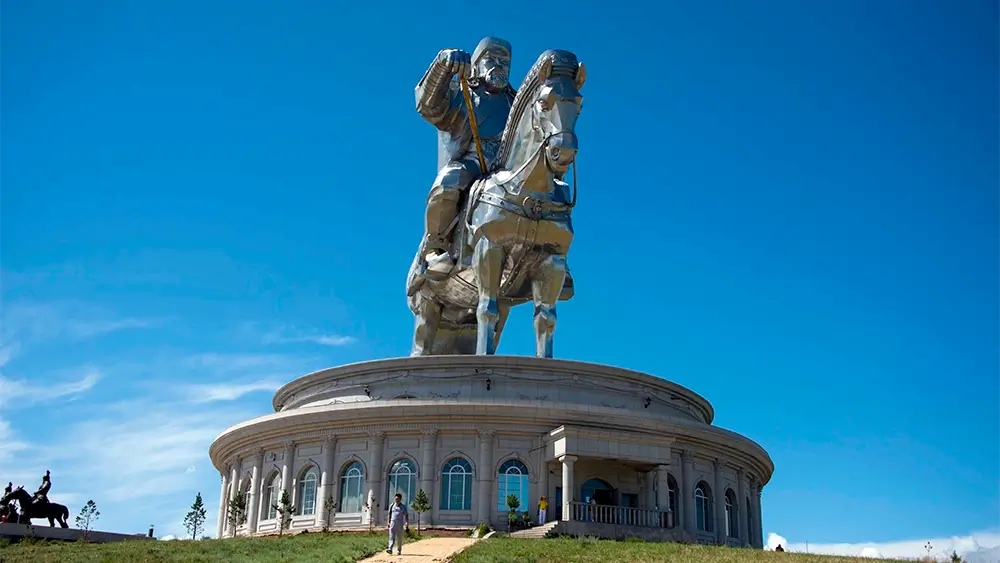
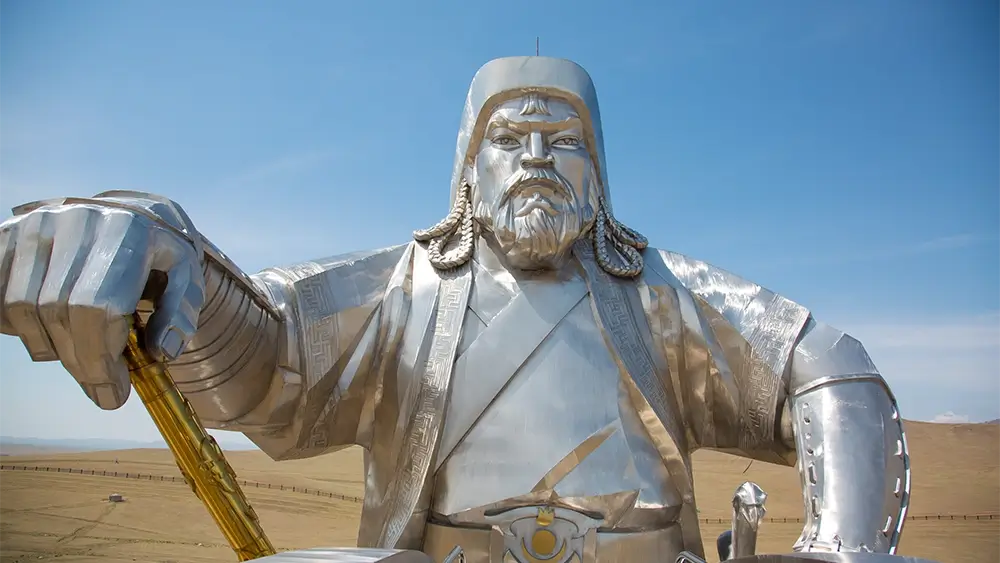
Our adventure begins with a visit to the iconic Genghis Khan Monument—a towering aluminum statue of Mongolia’s legendary leader on horseback. Guests can ascend to the top for breathtaking panoramic views, while the on-site museum provides fascinating insight into the history of the Great Mongol Empire, including the Khans' lineage and their expansive conquests.
From there, we’ll explore the famous Turtle Rock, a unique natural formation resembling a giant turtle, and continue on to the tranquil Aryaval Monastery. Nestled at the base of a mountain, this peaceful meditation temple is surrounded by scenic trails—perfect for hiking, rock climbing, or simply soaking up the calm of the surrounding nature.
Activities:
- Genghis Khan Statue & panoramic views
- Aryaval Monastery meditation retreat
- Turtle Rock natural formation
- Optional horseback riding through nature
Accommodation:
- Yurt stay
- L, D
Genghis Khan Statue & Gorkhi-Terelj National Park
We’ll set off early in the morning from Ulaanbaatar, traveling 70 kilometers east to the breathtaking Terelj National Park. Our route winds through a scenic valley framed by lush, forested hills and dramatic granite cliffs. Along the way, we’ll pass fields alive with colorful wildflowers and spot herds of yaks, horses, goats, and sheep peacefully grazing in the open pastures.
Terelj is a stunning natural escape, known for its striking granite rock formations, towering pine trees, and a gentle river that meanders through the landscape. Whether you're in the mood for hiking, horseback riding, or simply relaxing and taking in the serene views, this park offers the perfect setting.
Our adventure begins with a visit to the iconic Genghis Khan Monument—a towering aluminum statue of Mongolia’s legendary leader on horseback. Guests can ascend to the top for breathtaking panoramic views, while the on-site museum provides fascinating insight into the history of the Great Mongol Empire, including the Khans' lineage and their expansive conquests.
From there, we’ll explore the famous Turtle Rock, a unique natural formation resembling a giant turtle, and continue on to the tranquil Aryaval Monastery. Nestled at the base of a mountain, this peaceful meditation temple is surrounded by scenic trails—perfect for hiking, rock climbing, or simply soaking up the calm of the surrounding nature.
Activities:
- Genghis Khan Statue & panoramic views
- Aryaval Monastery meditation retreat
- Turtle Rock natural formation
- Optional horseback riding through nature
Accommodation:
- Yurt stay
- L, D
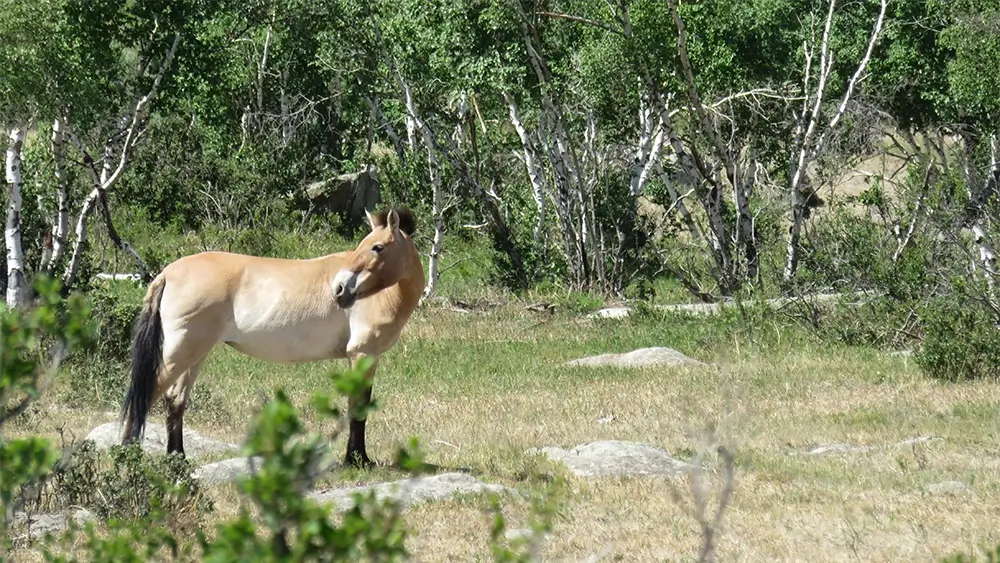
Today, we will journey to Khustain Nuruu National Park. Just before reaching the park, we will stop at the Mongol Nomadic Tourist Camp to immerse ourselves in local culture and traditions.
The Przewalski's Horse, also known as the Takhi horse, is a rare and endangered wild horse subspecies native to the steppes of Central Asia. Once extinct in the wild, it has been reintroduced to its natural habitat in Mongolia. Khustain Nuruu National Park was established as a reserve in 1993 and was elevated to national park status in 1998. Currently, the park is home to approximately 350 Takhi horses, along with 459 vascular plant species and 217 bird species.
Upon our arrival at the Khustain Nuruu National Park camp, we will meet the park staff and learn about their ongoing projects. In the afternoon, we will explore the park's stunning natural wonders.
Activities:
- Explore Khustai national park
- Catch a glimpse the wild horses
Accommodation:
- Yurt stay
- B, L, D
Khustai National Park
Today, we will journey to Khustain Nuruu National Park. Just before reaching the park, we will stop at the Mongol Nomadic Tourist Camp to immerse ourselves in local culture and traditions.
The Przewalski's Horse, also known as the Takhi horse, is a rare and endangered wild horse subspecies native to the steppes of Central Asia. Once extinct in the wild, it has been reintroduced to its natural habitat in Mongolia. Khustain Nuruu National Park was established as a reserve in 1993 and was elevated to national park status in 1998. Currently, the park is home to approximately 350 Takhi horses, along with 459 vascular plant species and 217 bird species.
Upon our arrival at the Khustain Nuruu National Park camp, we will meet the park staff and learn about their ongoing projects. In the afternoon, we will explore the park's stunning natural wonders.
Activities:
- Explore Khustai national park
- Catch a glimpse the wild horses
Accommodation:
- Yurt stay
- B, L, D
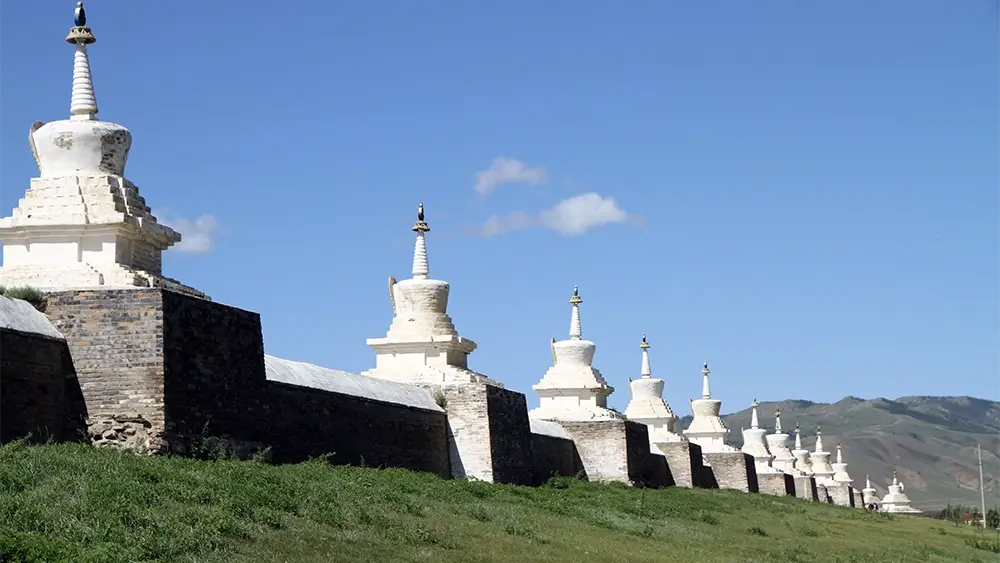
Today, we journey to Karakorum, the former capital of Genghis Khan’s empire in the 13th century. Founded in 1220 on the remnants of ancient Turug and Uigur cities in the Orkhon Valley, it was completed 15 years later under Ugedei Khan. Known for its multiculturalism, Karakorum thrived as a political, commercial, and cultural center. The famous Silver Tree from Möngke Khan’s palace became a symbol of the city’s prosperity.
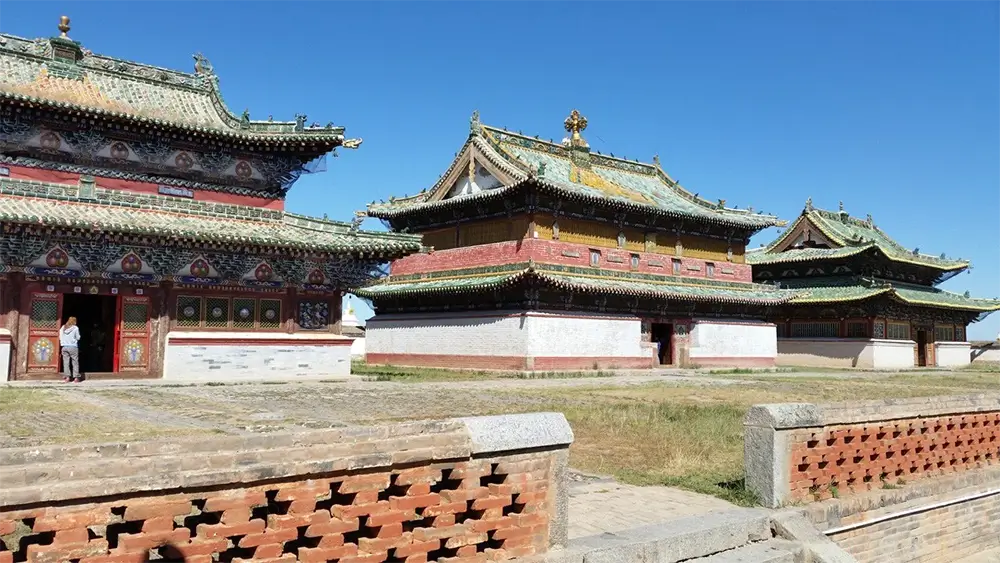
In 1260, Karakorum lost its status when Kublai Khan moved the capital to Beijing. Though briefly revived after the fall of the Yuan Dynasty in 1368, it was destroyed by Ming troops in 1388. Later, in 1580, Abtai Sain Khan and Lord Tumenkhen sought spiritual guidance from the 3rd Dalai Lama, leading to the founding of the Erdene Zuu Monastery in 1588 on the city’s ruins.
Once a vast complex of 100 temples and over 1,000 lamas, Erdene Zuu now contains three surviving temples—Dalai Lama, Zuu of Buddha, and Lavrin Temple—all enclosed within a 400 x 400-meter wall. The grounds remain open for exploration.
A visit to the Karakorum Archaeological Museum reveals artifacts from the 13th–14th centuries, including tools, pottery, religious sculptures, coins, and inscriptions. Highlights include a partially excavated kiln embedded in the floor, a scale model of ancient Karakorum (inspired by William of Rubruck’s account), and a Turkic noble’s tomb filled with wall paintings, gold, and jewelry, presented alongside an informative video.
We'll also stop by Turtle Rock and Phallic Rock, and browse a small market featuring local art and crafts.
Activities:
- Visit Erdene Zuu monastery
- Explore the Karakorum museum
Accommodation:
- Yurt stay
- B, L, D
Karakorum
Today, we journey to Karakorum, the former capital of Genghis Khan’s empire in the 13th century. Founded in 1220 on the remnants of ancient Turug and Uigur cities in the Orkhon Valley, it was completed 15 years later under Ugedei Khan. Known for its multiculturalism, Karakorum thrived as a political, commercial, and cultural center. The famous Silver Tree from Möngke Khan’s palace became a symbol of the city’s prosperity.
In 1260, Karakorum lost its status when Kublai Khan moved the capital to Beijing. Though briefly revived after the fall of the Yuan Dynasty in 1368, it was destroyed by Ming troops in 1388. Later, in 1580, Abtai Sain Khan and Lord Tumenkhen sought spiritual guidance from the 3rd Dalai Lama, leading to the founding of the Erdene Zuu Monastery in 1588 on the city’s ruins.
Once a vast complex of 100 temples and over 1,000 lamas, Erdene Zuu now contains three surviving temples—Dalai Lama, Zuu of Buddha, and Lavrin Temple—all enclosed within a 400 x 400-meter wall. The grounds remain open for exploration.
A visit to the Karakorum Archaeological Museum reveals artifacts from the 13th–14th centuries, including tools, pottery, religious sculptures, coins, and inscriptions. Highlights include a partially excavated kiln embedded in the floor, a scale model of ancient Karakorum (inspired by William of Rubruck’s account), and a Turkic noble’s tomb filled with wall paintings, gold, and jewelry, presented alongside an informative video.
We'll also stop by Turtle Rock and Phallic Rock, and browse a small market featuring local art and crafts.
Activities:
- Visit Erdene Zuu monastery
- Explore the Karakorum museum
Accommodation:
- Yurt stay
- B, L, D
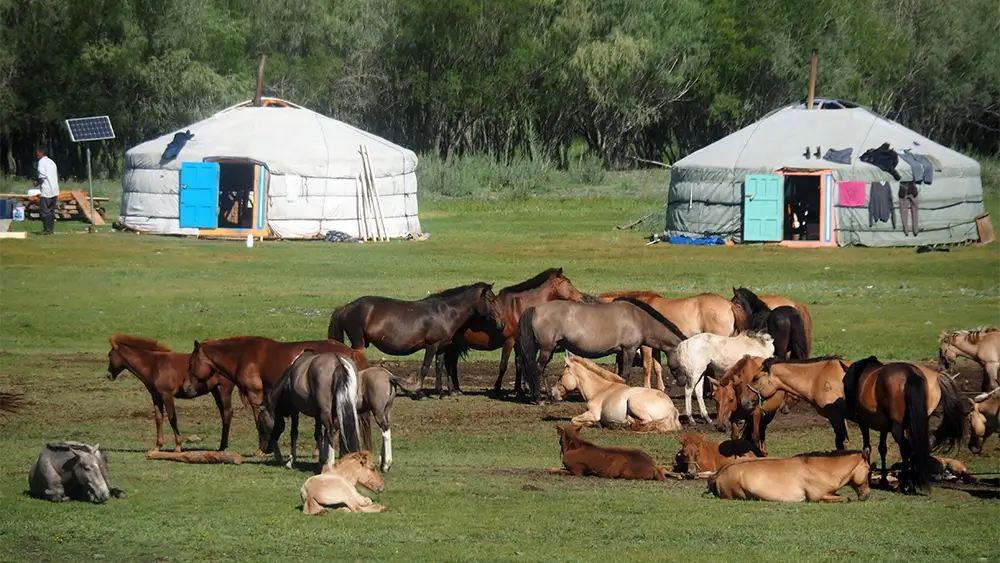
Today, we head to Khogno Khan National Park for a scenic trek through the mountains, ending with panoramic views of hills, sand dunes, and vast grasslands. We’ll also visit the serene Ovgon Monastery.
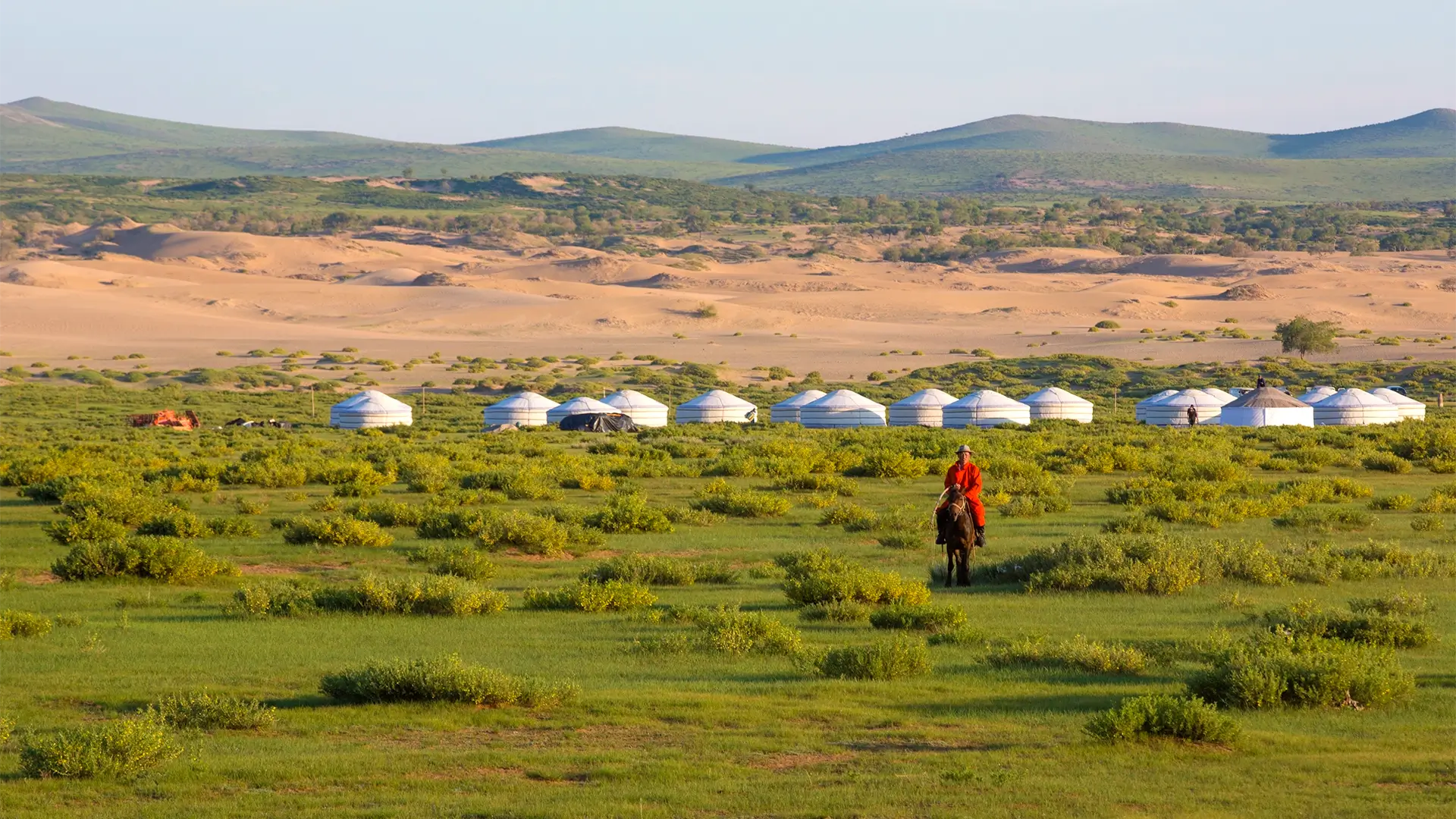
Nearby, the Elsen Tasarkhai Sand Dunes—known as the Little Gobi—stretch across 100 kilometers, offering a striking desert landscape in the heart of the steppe.
Activities:
- Explore Elsen Tasarkhai Sand Dunes
- Hike Khogno Khan Mountain
- Visit Ovgon Monastery
- Meet a camel herding family
- Optional camel riding experience
Accommodation:
- Yurt stay
- B, L, D
Khogno Khan Mountains and Elsen Tasarkhai
Today, we head to Khogno Khan National Park for a scenic trek through the mountains, ending with panoramic views of hills, sand dunes, and vast grasslands. We’ll also visit the serene Ovgon Monastery.
Nearby, the Elsen Tasarkhai Sand Dunes—known as the Little Gobi—stretch across 100 kilometers, offering a striking desert landscape in the heart of the steppe.
Activities:
- Explore Elsen Tasarkhai Sand Dunes
- Hike Khogno Khan Mountain
- Visit Ovgon Monastery
- Meet a camel herding family
- Optional camel riding experience
Accommodation:
- Yurt stay
- B, L, D
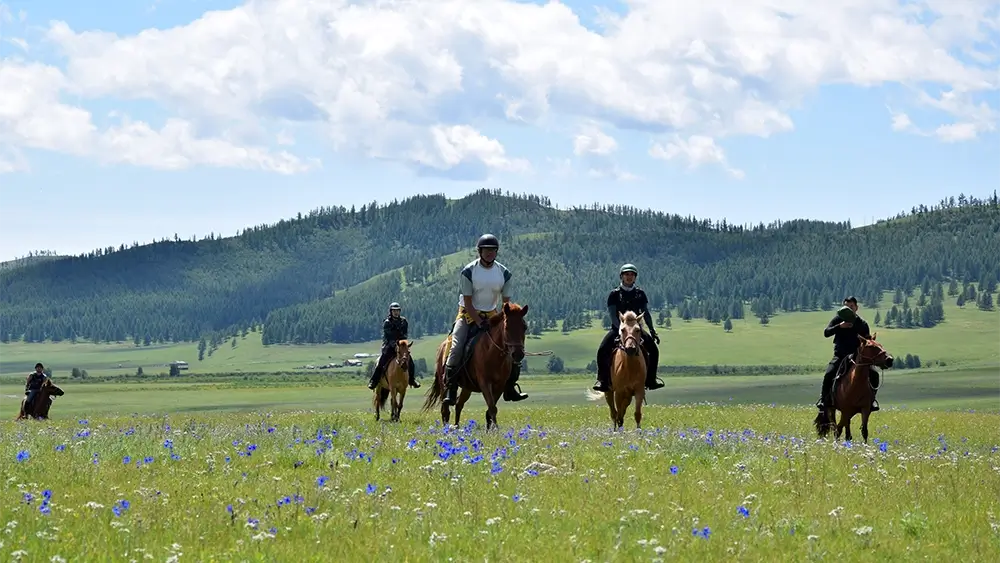
The moment has arrived to depart and make your way back to Ulaanbaatar, the capital of Mongolia. You are free to spend your afternoon as you wish. You will have the opportunity to enjoy a beautiful cultural performance, featuring talented contortionists, while you take in the vibrant and rhythmic dances of Mongolia.
Activities:
- Attend a folklore show featuring throat singers
- Shop for souvenir or cashmere. Optional
Accommodation:
- Yurt stay
- B, L
Drive back to Ulaanbaatar
The moment has arrived to depart and make your way back to Ulaanbaatar, the capital of Mongolia. You are free to spend your afternoon as you wish. You will have the opportunity to enjoy a beautiful cultural performance, featuring talented contortionists, while you take in the vibrant and rhythmic dances of Mongolia.
Activities:
- Attend a folklore show featuring throat singers
- Shop for souvenir or cashmere. Optional
Accommodation:
- Yurt stay
- B, L
Similar Tours
Canoeing Orkhon Valley
- Moderate
- 15 days
- 13 / max
Big Loop
- Moderate
- 17 days
- 14 / max
The Secret of Gobi Desert & the Winding Steppes of Mongolia
- Moderate
- 8 days
- 14 / max
Winter national parks
- Moderate
- 3 days
- 14 / max
Naadam Festival
- Easy
- 2 days
- 14 / max
Cradle of Mongolian Civilization
- Moderate
- 5 days
- 14 / max
Camel Trek through Central Mongolian Grasslands
- Moderate
- 6 days
- 14 / max
Into the Wild: Trekking to Khagiin Khar Lake
- Challenge
- 8 days
- 14 / max
Adventure into Nature: Trekking the Eight Lakes & Orkhon valley
- Challenge
- 9 days
- 13 / max
Discovering Central and Northern Mongolia
- Moderate
- 12 days
- 14 / max